
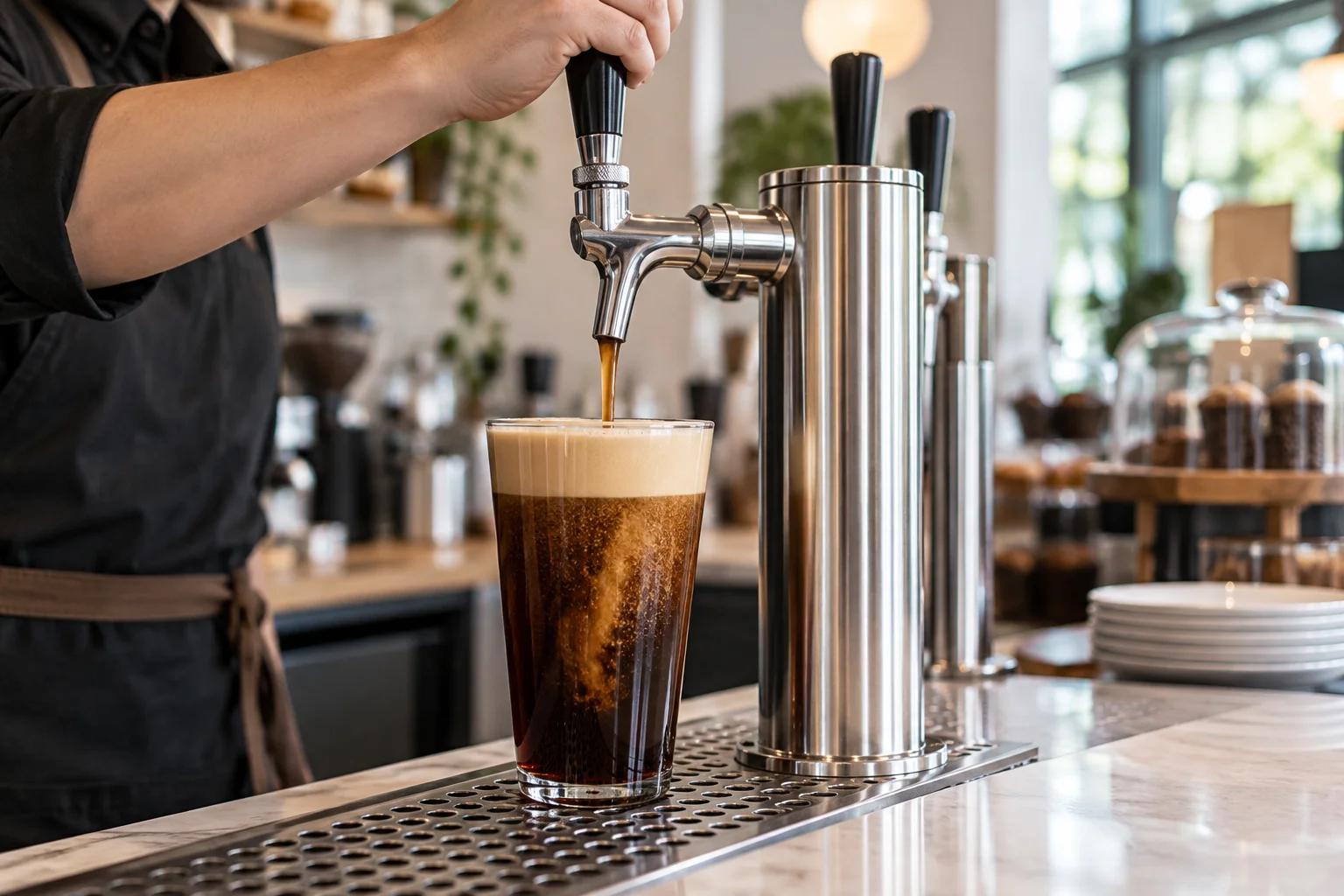
Nitrogen for nitro coffee is a beverage-grade gas, usually supplied in cylinders or made on site with NITRO-DRAUGHT Nitrogen Generators, that infuses cold brew with tiny bubbles as it pours. This guide covers gas type, pressure, equipment, tank life and supply options so a cafe can plan a nitro cold brew coffee tap.
What Nitrogen for Nitro Coffee Does a Cafe Need?
Nitro coffee needs beverage-grade nitrogen gas at steady pressure, fed to a keg of cold brew. Nitrogen is inert in these applications, so it does not react with the coffee or change its flavor. It changes how the drink pours and feels. A cafe needs a nitrogen source, either cylinders or a generator, plus the gas-side hardware that connects it to the keg.
Nitro is a second gas with a different job from the carbon dioxide used for soda, so it needs its own cylinder, regulator and secure spot in the storage room.
Is the nitrogen used for nitro coffee food grade?
It should be. Anything that goes into a drink needs beverage-grade or food-grade nitrogen, not an industrial grade made for shop work. Tell your supplier the gas is going to a beverage tap and ask them to confirm the grade. Green CO2 Systems supplies beverage gas to bars, restaurants and breweries, so that is a routine question for us.
How Does Nitrogen for Cold Brew Make Nitro Coffee on Tap?
Start with the coffee. Roasters brew coffee cold by steeping coarse grounds in cool water for many hours. The result, cold brew coffee, usually tastes smoother and less acidic than hot brewed coffee. Nitro cold brew takes that same drink and adds a gas.
Here is the mechanism. Nitrogen dissolves in liquid far less readily than carbon dioxide does, so it forms tiny bubbles instead of large ones. The keg holds the cold brew under nitrogen pressure. When you open the tap, the coffee is pushed through a narrow opening, the pressure drops, and the nitrogen leaves the liquid as a cloud of fine bubbles. That cascade rolls down the glass and settles into a creamy foam head.
Put simply, nitro coffee is cold coffee with nitro gas dissolved in it under pressure. The drinker notices three things: the cascade, the foam and a velvety mouthfeel. The small bubbles give the drink a thick texture with no cream added.
Nitrogen does not change caffeine. That depends on your coffee cold brew recipe and the size of the pour.
Why use nitrogen instead of CO2 for nitro cold brew?
Carbon dioxide dissolves easily and forms a mild acid called carbonic acid in water. That gives a sharp bite and large bubbles. On cold brew, the bite works against the smooth flavor you brewed for. Nitrogen stays quiet. It builds foam and body without the tang.
What Gas Blend and Pressure Does a Nitro Cold Brew Tap Need?
The right gas depends on the drink. This table compares the common choices.
| Gas | What the drinker gets | Common use |
|---|---|---|
| Pure nitrogen | Smooth, creamy, no fizz | Nitro cold brew and other still drinks |
| Nitrogen and CO2 blend (beer gas) | Creamy foam with a light bite | Stouts and other nitro beers |
| CO2 only | Sharp fizz, large bubbles | Soda, sparkling drinks, most beers |
| Generator-made nitrogen | Same result as pure nitrogen, made on site | Taps that pour often |
Pressure is the second half of the answer. Many nitro coffee taps run somewhere between 30 and 40 psi (pounds per square inch) at the regulator. Your keg, gas line length and faucet all change the right number, so follow the equipment maker's spec.
Is nitro coffee made with pure nitrogen or a nitrogen and CO2 blend?
Most nitro cold brew uses pure nitrogen. A nitrogen and CO2 blend, often called beer gas, is the usual pick for stouts because beer already carries CO2 and needs some in the gas to stay balanced. Cold brew has no such need, and the extra CO2 would add the bite you are trying to avoid. Green CO2 Systems supplies both pure nitrogen and blended beer gas, so a shop with coffee and beer taps can get both from one source.
What Equipment Connects a Nitrogen Tank to a Nitro Cold Brew Keg?
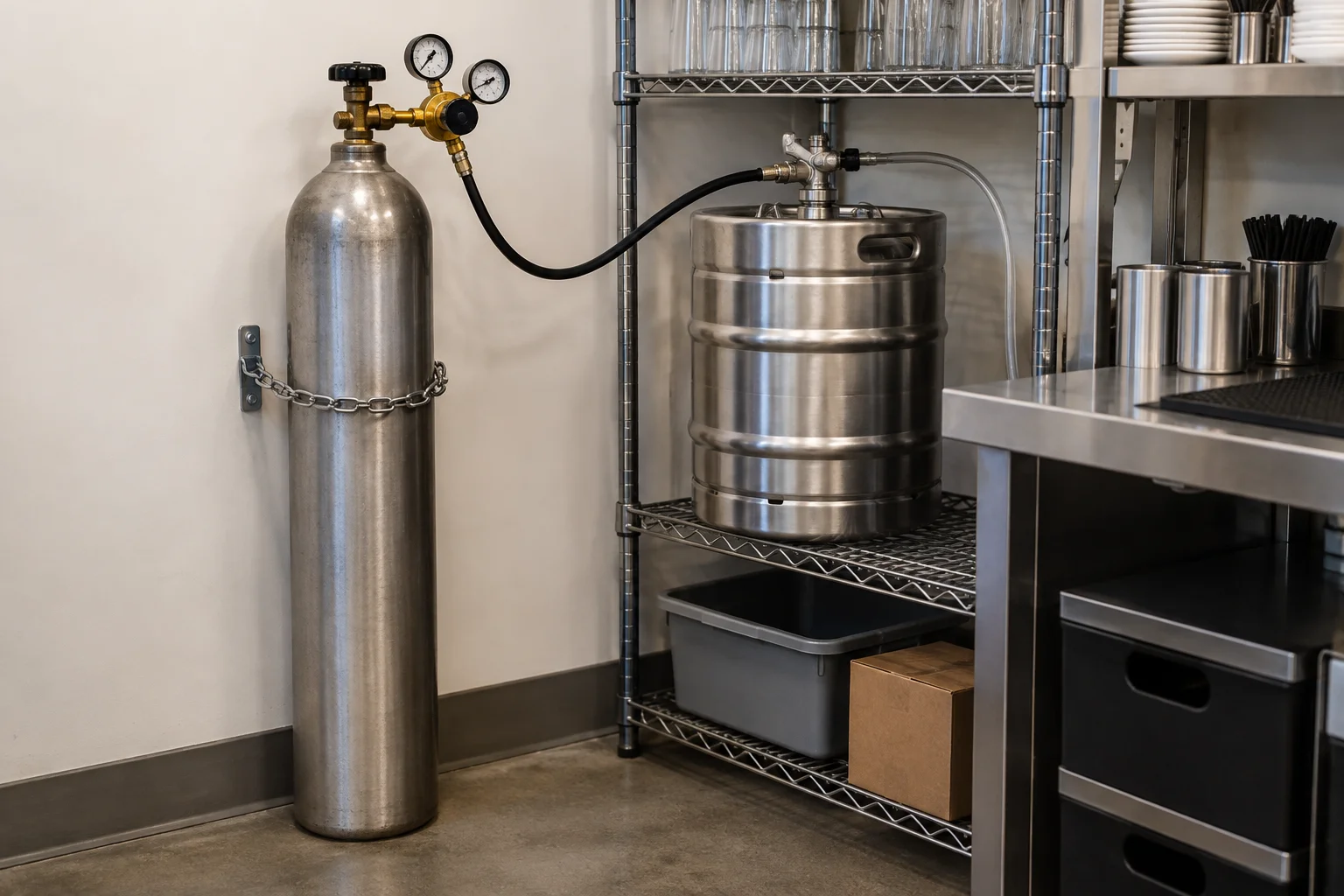
We supply the gas side of the setup. Your keg and dispenser come from your dispense equipment supplier. The gas path has four parts:
- Nitrogen cylinder. Stand it upright and secure it with a chain or strap so it cannot tip.
- Regulator. It bolts to the cylinder and steps the high cylinder pressure down to the working pressure for the keg.
- Gas line. A hose runs from the regulator to the keg.
- Keg connection. The coupler on the keg lets the gas in and sends the coffee out to the tap.
Nitrogen does not smell or show, and in a small closed room it can push out the oxygen people breathe. Keep cylinders in a ventilated space, check the connections for leaks, and give a tight back room a second look before you add tanks to it.
How Much Nitrogen Does a Nitro Coffee Tap Use, and How Long Does a Tank Last?
A nitro tap uses less gas than most people expect. The nitrogen pushes the coffee out of the keg and keeps it under pressure, so use follows keg volume and pour speed more than hours open. Four things move the number:
- Keg size and how often you change kegs.
- The pressure you set at the regulator.
- Leaks at fittings, which waste gas all day.
- How busy the tap is on a weekend versus a Tuesday.
How long does a nitrogen tank last on a nitro cold brew keg?
No single number is honest here. A cylinder feeding one slow tap can last a long time, while a busy weekend drains it much faster. The best answer is your own: note the date you install a cylinder and the date it empties, and after a few swaps you have a real figure for your shop. Telemetry, which Green CO2 Systems includes on every cylinder exchange account, reports usage so you are not guessing.
Rent, Buy, Refill or Generate: Supply Options for a Coffee Shop
Should you rent, buy or refill nitrogen cylinders for a coffee shop?
Green CO2 Systems fills only its own cylinders, and they come to you by exchange. You swap an empty nitrogen cylinder for a full one, and the refilling happens as part of that swap. When a cafe opens new locations, each one gets its own exchange account, so every shop has its own cylinder count and its own usage record. Give us your keg count and pour volume, and we can talk through which Nitrogen Gas Supply setup fits your tap.
Can you use a nitrogen generator instead of tanks for nitro cold brew?
In many cases, yes. A nitrogen generator produces nitrogen on site from air, so there are no cylinders to swap. NITRO-DRAUGHT generators are made by Fizz Dog, and Green CO2 Systems sells and services them. Whether one fits depends on how many taps you run and how much you pour. Ask us before you decide, because we do not quote generator output here.
| Your situation | Likely gas source | What to confirm |
|---|---|---|
| One nitro tap, steady pour | Nitrogen cylinder exchange | Secure storage space for the cylinder |
| Several nitro taps, heavy pour | Nitrogen generator | Floor space and power at the install spot |
| Coffee and beer taps together | Cylinders, including blended beer gas | Which gas feeds which line |
Plan Your Nitro Cold Brew Gas Supply With Green CO2 Systems
Tell us how many nitro taps you run and how fast you pour, and we will talk through cylinder exchange or a generator for your shop. Contact Us to start that conversation.
Common questions
You can push cold brew with CO2, but you will get fizzy coffee, not nitro coffee. Carbon dioxide makes large bubbles and a tangy edge, and it does not build the creamy foam head or the velvety mouthfeel. If you want the nitro look and texture, the gas needs to be nitrogen or a nitrogen-based blend.
Nitrogen changes the texture without changing the flavor. The tiny bubbles create a creamy foam and a thicker, smoother mouthfeel, and the drink tastes sweeter to many people with no sugar added. Cold brew already has lower acidity, so nitrogen suits it well.
Fill a keg with cold brew, connect a nitrogen cylinder through a regulator, and set the pressure to the equipment maker's spec. The keg holds the coffee under nitrogen, and a nitro tap pours it with the cascade. Keep the cylinder upright and secured, and check the fittings for leaks regularly.
Home kits exist, but they run on small chargers and are a different product from a commercial tap. Green CO2 Systems supplies commercial accounts such as bars, restaurants and breweries, so a cafe that wants a nitro cold brew tap is the right fit for us. A home setup is not a service we offer.
Written by Green CO2 Systems
Green CO2 Systems develops and assembles its own patented equipment and supplies micro bulk CO2, nitrogen and blended beverage gas from depots in Oklahoma City, Denver, Fort Collins and Las Vegas.