
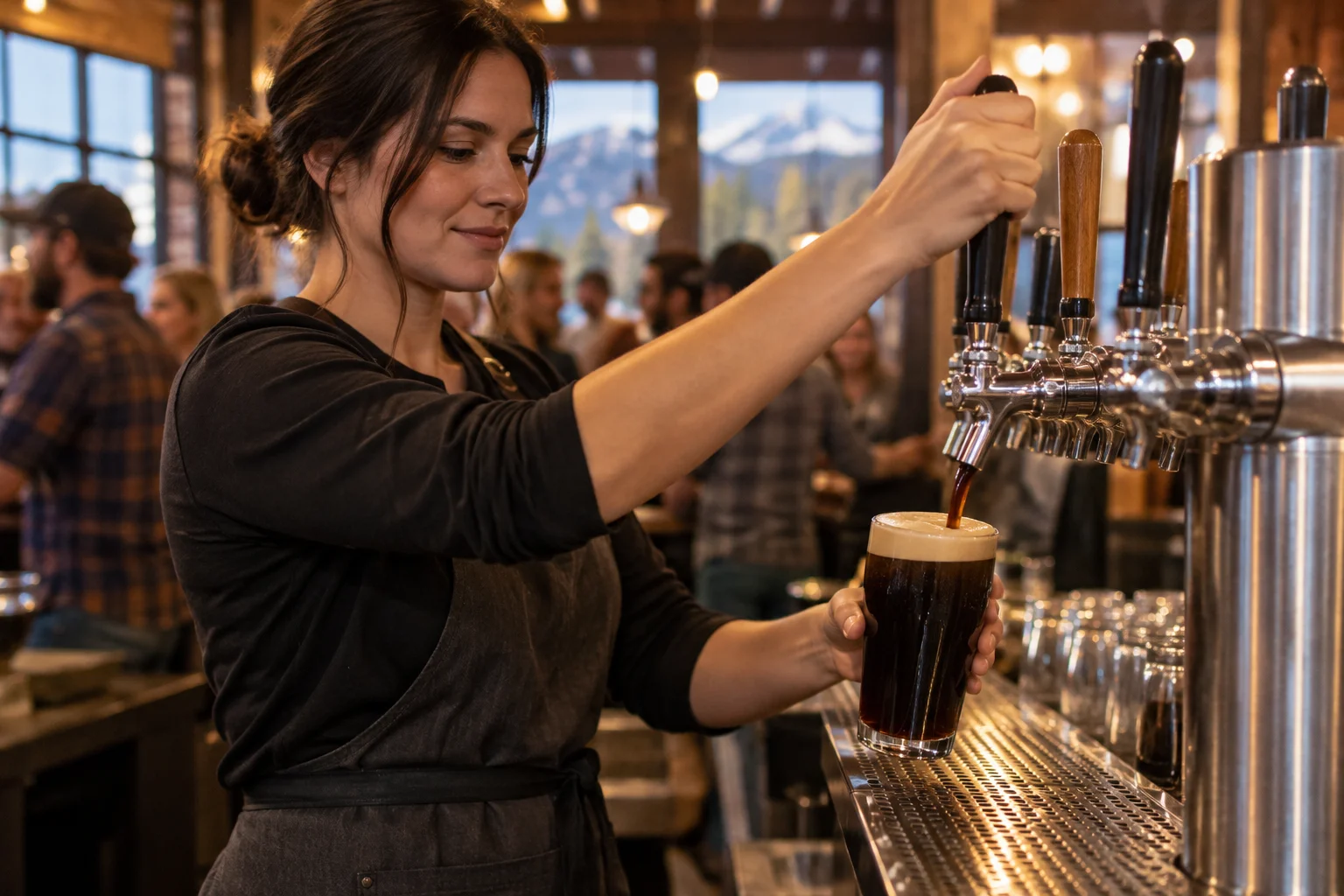
Blended Beer Gas is what lets a nitrogen beer tap pour a stout with a thick, creamy head. A bar also needs a stout faucet, a regulator and steady pressure. Here is what the system includes, how to pour nitro beer, and where the gas supply fits.
What Is a Nitrogen Beer Tap and How Does It Work?
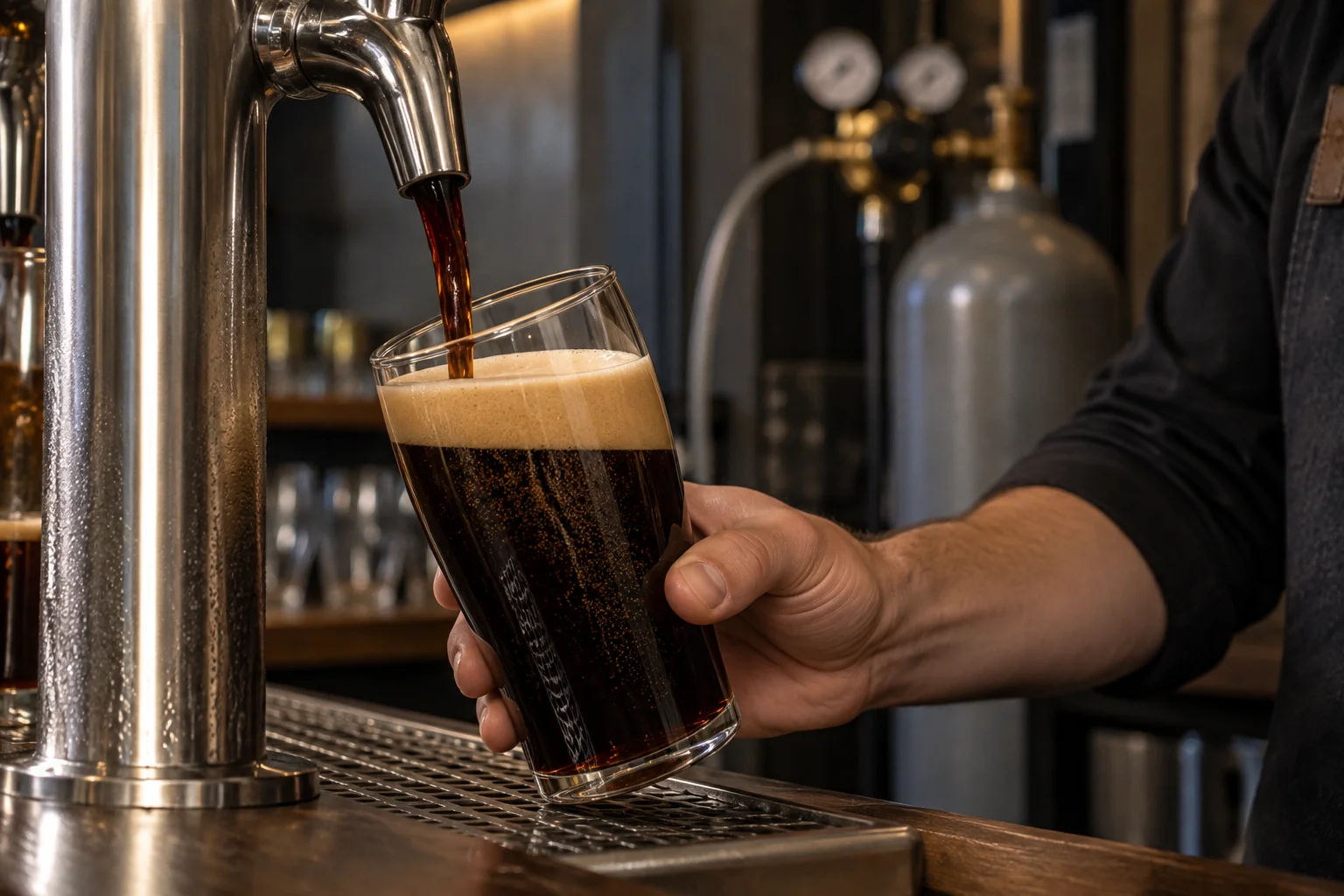
A nitrogen beer tap pushes beer with nitrogen or a nitrogen-heavy blend instead of straight CO2 (carbon dioxide). The beer leaves the keg under pressure and squeezes through a restrictor plate, a small disc with tiny holes, inside a stout faucet. That squeeze knocks nitrogen out of the beer as very fine bubbles.
Nitrogen barely dissolves in liquid, so its bubbles stay small. CO2 dissolves easily and makes bigger, sharper bubbles. That is why a CO2 beer tastes fizzy and a nitro pour tastes smooth and creamy. The glass fills with a cloud of tiny bubbles that sinks, then clears from the bottom while a dense head builds on top.
What Does a Bar Need to Serve Nitro Beer on Tap?
A bar serving nitro beer on tap needs a nitro-ready keg, a blended gas supply, a regulator, a dedicated gas line and a stout faucet. Green CO2 Systems handles the gas and cylinder side. Your draft installer or brewery handles the kegs, lines and faucets.
What does a nitro draft system include?
A nitro draft system has five core parts:
- A stainless steel keg of nitro-ready beer
- A cylinder of blended beer gas
- A regulator with two gauges: one for what is left in the cylinder, one for delivery pressure in psi (pounds per square inch)
- A gas line and a beer line
- A stout faucet with a restrictor plate
Cylinders reach you by exchange, so you swap an empty for a full one. Green CO2 Systems includes telemetry on every cylinder exchange account, so gas levels are watched between swaps.
Why does a nitrogen beer tap need a stout faucet with a restrictor plate?
The plate turns pressure into texture. A standard faucet releases beer in one smooth stream, so most of the nitrogen stays dissolved and the head comes out thin and fades fast. The restrictor plate forces the bubbles out as the beer passes through, which builds the cascading effect and the creamy head.
What Gas Blend and Pressure Does a Nitro Beer Tap System Need?
A nitro beer tap system for stouts usually runs on beer gas, commonly about 75% nitrogen and 25% CO2. The nitrogen builds the creamy body. The CO2 keeps a little carbonation in the beer so it does not taste flat. Nitro taps also run at higher pressures than a CO2 tap, often 30 to 40 psi at the regulator, but the brewery's spec for that keg sets the exact number.
Do you need pure nitrogen or beer gas to pour a nitro stout?
Stouts need beer gas. Pure nitrogen suits still drinks, such as nitro cold brew. Here is how the three gases compare:
| Gas | Best for | Watch out for |
|---|---|---|
| Beer gas (nitrogen and CO2 blend) | Nitro stouts, milk stouts, creamy ales | Use the blend the brewery specifies |
| Pure nitrogen | Nitro cold brew and other still beverages | Too little carbonation for most beers |
| CO2 | Regular lagers, ales and IPAs | Cannot build a nitro head |
Can you run nitro beer on a regular CO2 draft system?
No. Straight CO2 at standard pressure dissolves into the beer, so a stout turns fizzy and sharp instead of creamy, and a regular faucet lacks the restrictor plate. Most bars keep their CO2 taps for lagers and add a separate nitro tap on its own gas.
Getting the Gas Side of a Nitro Tap Right
The gas side comes down to two things, and both protect the pour.
Match the gas to the keg
Check the keg label or ask your brewery rep which gas it expects. Nitro stouts usually want beer gas. Run CO2 into that keg and the beer loses its creamy texture.
Secure the cylinder
Chain the cylinder upright in a ventilated space. A tipped cylinder can break its valve, and a leak in a closed room can crowd out the air you breathe.
Your draft installer connects the regulator, lines and stout faucet and sets the system to the brewery's spec.
If you want the blend and cylinder size matched to your taps before the first keg goes on, ask Green CO2 Systems about nitrogen gas supply and share your tap count and what you pour.
How to Pour Nitro Beer from a Stout Faucet
Learning how to pour nitro beer takes five moves, and the glass looks right every time.
- Start with a clean glass rinsed in cold water. Residue kills the head.
- Tilt the glass to about 45 degrees under the stout faucet and pull the handle fully forward. A half-open faucet sprays and wastes the cascade.
- Fill to about three quarters and set the glass down. Let the surge settle for a minute or so.
- Straighten the glass and top it off with a gentle pour so the head domes slightly.
- Serve right away, while the head is dense.
What Beers Besides Stouts Can a Bar Serve on Nitro?
Milk stouts, porters, Irish red ales and some brown ales also pour well on nitro. Familiar nitro beers include Guinness Draught, Murphy's Irish Stout and Left Hand Milk Stout Nitro. Ask your distributor which kegs are nitro-ready, because regular lagers do not suit it. Cold brew coffee is the other common nitro pour, and it usually runs on pure nitrogen. Green CO2 Systems supplies the beverage gas side only, not coffee equipment.
Get the Gas Side of Your Nitro Taps Sorted
Tell us how many nitro taps your bar runs and what you pour, and Green CO2 Systems will go over blend, cylinder exchange and telemetry with you. Reach the team through Contact Us.
Common questions
A cylinder of gas pushes beer out of the keg, through the beer line and out of the faucet. Most beers run on CO2, which also keeps them carbonated. Stouts run on a nitrogen and CO2 blend at higher pressure.
Guinness Draught is poured on tap with a nitrogen and CO2 blend through a stout faucet, which gives it the creamy head. The nitrogen is part of how a bar serves it.
Canned and bottled nitro stouts and some nitro ales carry a widget, a small plastic insert that releases nitrogen when you open the container. A bar does not need one, because its nitrogen comes from the gas supply at the tap.
Written by Green CO2 Systems
Green CO2 Systems develops and assembles its own patented equipment and supplies micro bulk CO2, nitrogen and blended beverage gas from depots in Oklahoma City, Denver, Fort Collins and Las Vegas.