
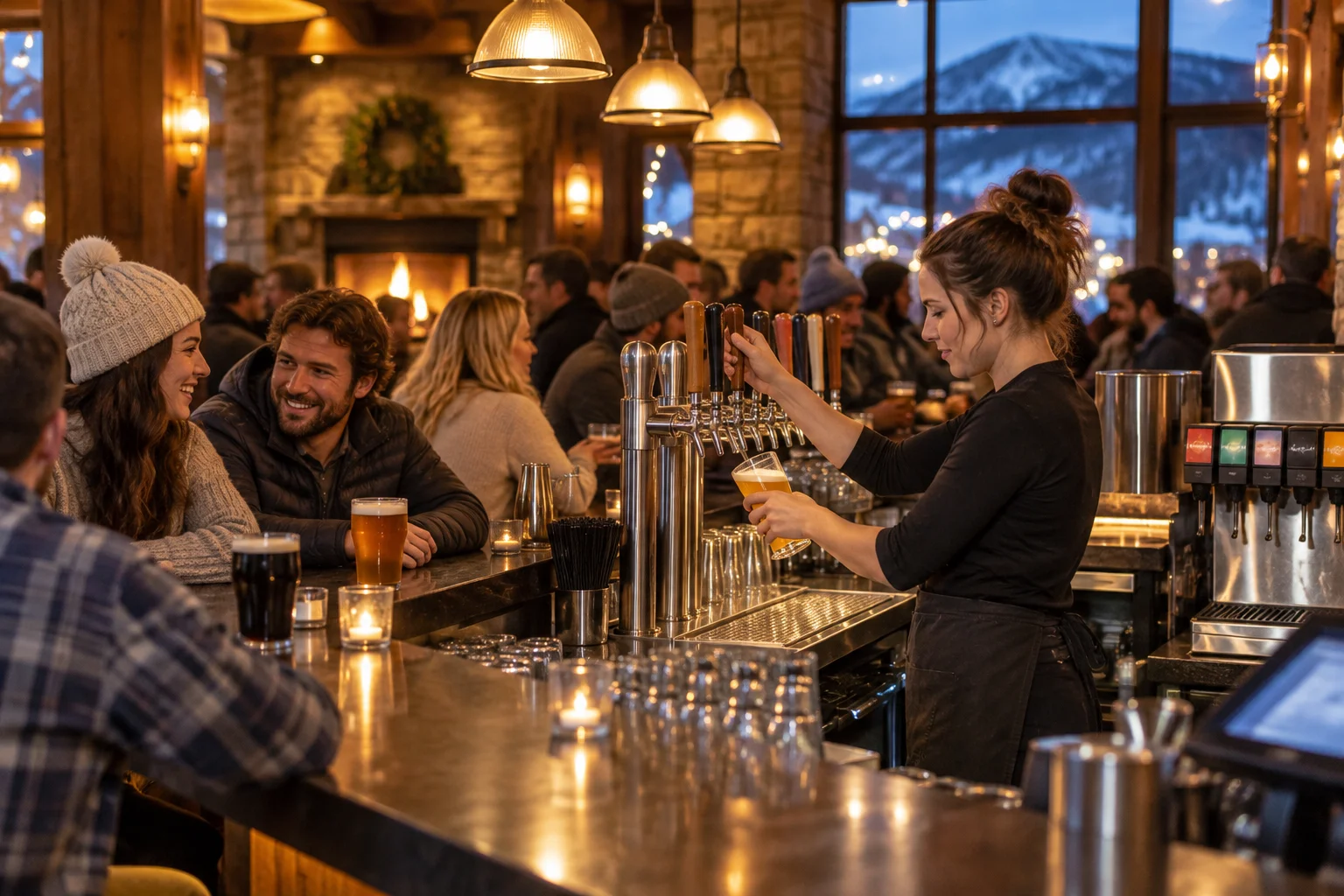
A bar prep schedule for draft and fountain CO2 turns the November and December rush into a checklist instead of a scramble. This guide shows bar managers how to build one, from daily checks to a plan for an empty cylinder. Green CO2 Systems supplies CO2 for Bars and Restaurants in Colorado, Las Vegas and Oklahoma.
What a Bar Prep Schedule for Draft and Fountain CO2 Should Include
Holiday crowds pour more beers and more fountain beverages in less time. Your bar CO2 system feeds both: carbon dioxide pushes draft beers to the tap and supplies the carbonation in fountain beverages. A bar prep schedule keeps that supply steady by settling who checks, what they check, how often, and who they call. Posted where everyone can see it, the schedule ensures the same checks happen no matter who opens.
Looking for Themis bar prep or a Themis bar prep login? That is a law bar exam course, and this guide covers the CO2 side of running a pub or restaurant.
Copy this starting layout into a notebook or a shared sheet.
| Task | Covers | How often |
|---|---|---|
| Read each gauge and log the number, with the lb size of each tank | Draft and fountain | Daily at open |
| Pour one test beer and one test soda | Draft and fountain | Daily at open |
| Look over the regulator, fittings and lines for leaks or frost | Draft and fountain | Weekly |
| Confirm the spare is full, upright, secured and the same lb size as the working tank | Draft and fountain | Weekly |
| Confirm the next exchange date with your suppliers | Draft and fountain | Weekly in November and December |
Can one bar prep schedule cover both draft beer and fountain soda CO2?
Yes. One CO2 supply often feeds both systems, so one schedule with one log works. Give each system its own line in the log so you can see which one uses more gas. If you pour a nitro brew or run a kegerator, nitrogen or nitrogen blends come from a separate supply with their own regulator, so track those gases and tanks on their own line.
How Far Ahead to Schedule CO2 Exchanges in November and December
Plan CO2 for bar service the way you plan staffing, working backward from your hardest days. Mark Thanksgiving week, the weekends before Christmas and New Year's Eve on a calendar, then book a cylinder exchange for the days before each one. Our office hours are Monday to Friday, 8 am to 4 pm Mountain, so a holiday weekend swap has to be set on a weekday ahead of time.
Build the calendar in the first week of November and confirm each exchange a week ahead, including cylinder sizes.
Telemetry (remote tank monitoring) is required on every Green CO2 Systems cylinder exchange and bulk account, so your schedule can follow how fast you actually use gas.
How much extra CO2 for bars is needed during the holiday rush?
There is no single number. Find your busiest weekend in your log, see how many cylinders it used, and plan holiday weekends to match or beat it. Tank sizes matter here, so note the lb size of each tank and compare like with like.
How often should a bar check its CO2 tanks in November and December?
Daily at open, and again at the start of any peak shift. On Friday, Saturday and event nights, read the gauge a third time halfway through service.
Daily CO2 Checklist for Draft and Fountain: Opening and Mid-Shift
What does a bar opening checklist for draft beer and fountain soda CO2 look like?
Use the same steps every day:
- Check that any CO2 alarm or monitor in the storage area shows normal. Carbon dioxide has no smell, so your nose will not warn you.
- Read each cylinder gauge and write the number in the log with the date.
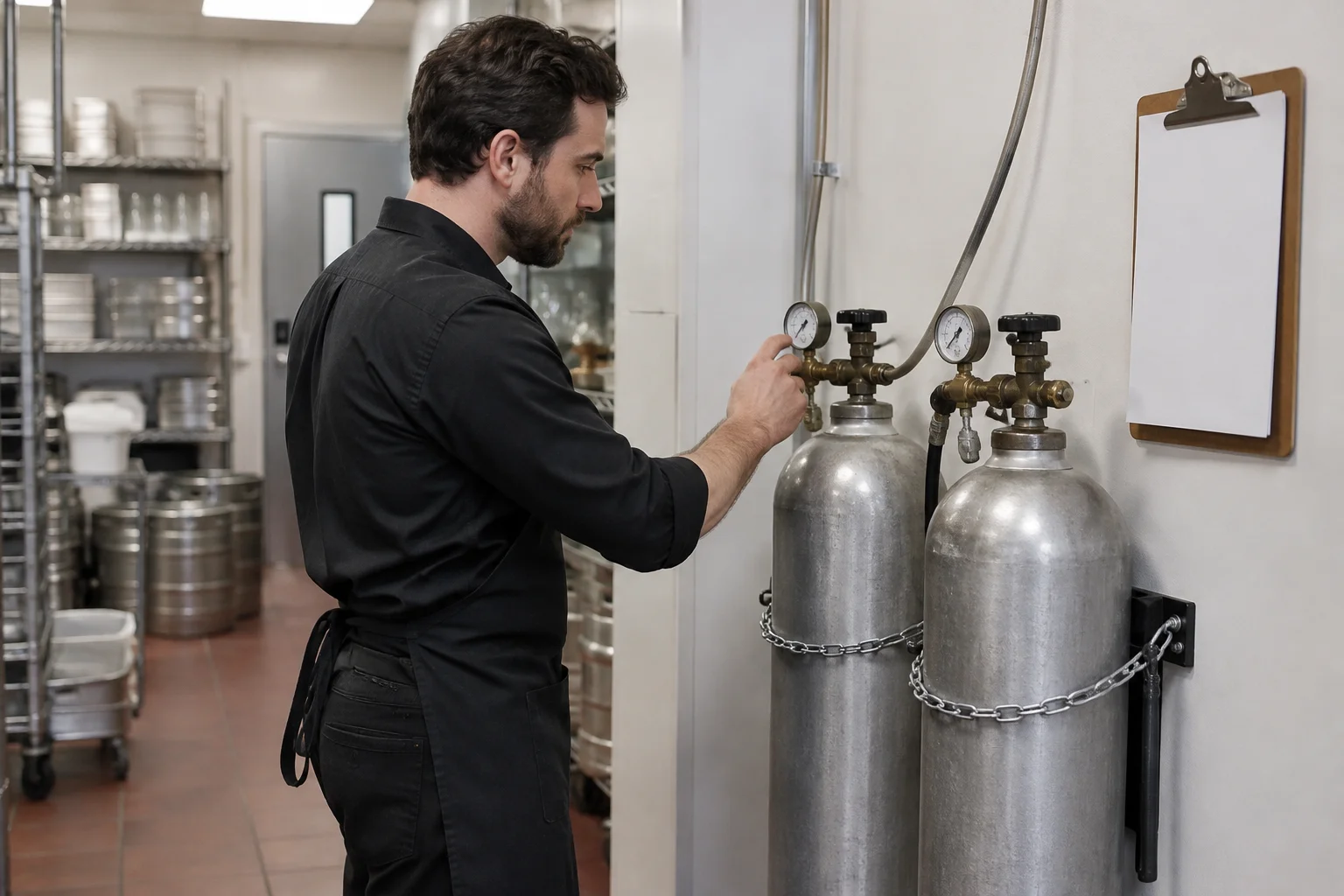
- Check that all tanks, in use and spare, stand upright and are chained or strapped.
- Pour one test beer and one test soda from the dispensing taps, including any kegerator. Foamy beer or flat soda points to a gas problem, and a good pour ensures the carbonation is right for your brew and other beverages.
- Count your full spares and note the next exchange date.
- Tell the manager about anything odd, then call your suppliers the same day.
Ask your suppliers which grades of CO2 they carry and check the grades on your delivery paperwork. Beverage grade keeps impurities low so the gas does not change how your beer and soda taste, and lower grades can carry more impurities. If a pour tastes off, tell your suppliers so they can rule out impurities. For a steady supply through busy stretches, see CO2 Tank Refill by Cylinder Exchange.
Weekly Bar Prep Schedule: Gauges, Regulators and Lines
Once a week, look, listen and note, but do not adjust anything. Check the regulator gauge (the dial that shows pressure) for a bouncing needle, listen for hissing at fittings, and look for frost or wet residue on connections and dispensing lines.
If something looks wrong, call your suppliers or a qualified technician. Do not tighten or repair regulators and fittings yourself. A leak wastes gas all week, and in a small back room it also adds carbon dioxide to the air. Keep gases separate too: nitrogen, nitrogen blends and other gases for nitro beers belong on their own tank and regulator, never on the CO2 line.
Carbon dioxide is heavier than air and settles in low spots like cellars, so confirm the spare is full, tag empty tanks and check airflow.
Backup CO2 Cylinders and a Runout Plan
Keep one full spare CO2 tank for bar service on site for each CO2 system you run, stored upright and secured in a ventilated spot. Keep spare and working tank sizes the same, in lb. Label each tank and regulator by gas, CO2 or nitrogen, so the two gases are never swapped. Then tape a one-page runout plan near the storage area. List who swaps cylinders, which shift lead to call, your suppliers' phone numbers and where empties go. Train at least two people per shift, which ensures a swap never waits on the one person who happens to be off that night.
How can you tell when a CO2 tank is about to run out?
Watch for four signs: a gauge dropping faster than usual, beer pouring foamy or slow, fountain beverages tasting flat from weak carbonation, and a hiss with weak flow at the tap or dispensing head.
A gauge is a late warning, because it can hold steady and then fall fast near the end.
What should a bar do if CO2 runs out in the middle of a holiday rush?
- Swap in your full spare using your runout plan.
- Pour a test beer and a test soda to confirm gas is flowing.
- If the swap does not fix it, or you have no spare, call your gas supplier. Existing Green CO2 Systems customers can reach an on-call tech after hours. An emergency delivery fee applies, and we do not promise a delivery time.
- Log what happened and book a replacement spare right away.
Mistakes That Break a Holiday CO2 Plan
Most holiday gas problems come from waiting for the first empty cylinder before ordering a refill, letting the spare become the working cylinder, and storing tanks loose or in a closet with no airflow.
Get Your Holiday CO2 Exchange Dates on the Calendar
Tell us how many CO2 systems your bar runs and which weekends hit hardest, and a Green CO2 Systems rep can explain how cylinder exchange works for your location. To start the conversation, Contact Us.
Written by Green CO2 Systems
Green CO2 Systems develops and assembles its own patented equipment and supplies micro bulk CO2, nitrogen and blended beverage gas from depots in Oklahoma City, Denver, Fort Collins and Las Vegas.