
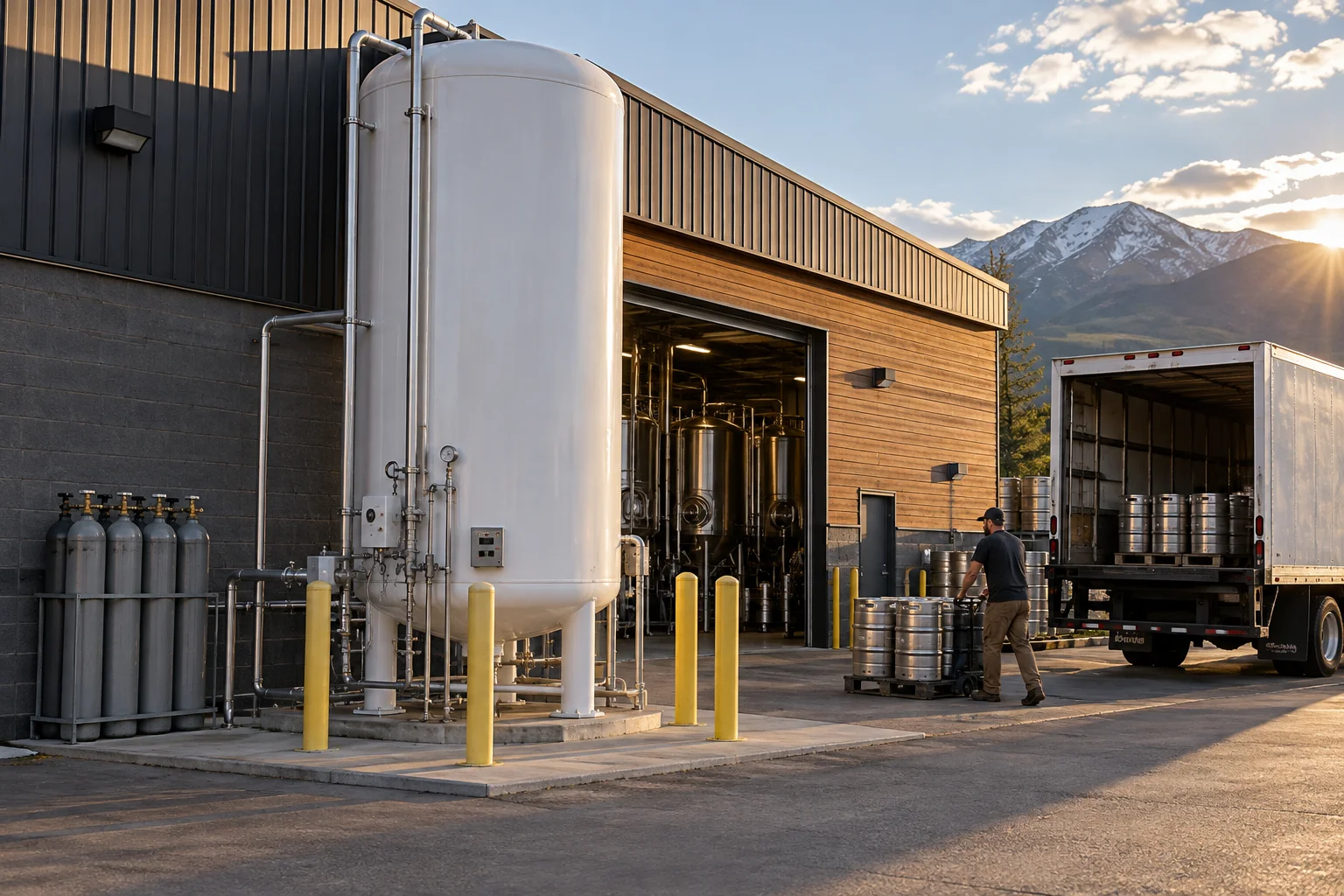
A liquid CO2 tank stores refrigerated CO2 at low pressure and suits very high-volume sites, while the High-Pressure Micro Bulk CO2 System and exchange cylinders hold it at high pressure for most bars, breweries and grow rooms.
| What you compare | Cylinder exchange | High-Pressure Micro Bulk CO2 System | Liquid CO2 tank |
|---|---|---|---|
| Storage | Portable cylinders at high pressure | Enclosed, semi-permanent high pressure storage | Insulated, refrigerated low pressure vessel |
| Refills | Full cylinder swapped for an empty one | Micro bulk CO2 delivery to your site | Truck fills the tank through a fill line |
| Venting | Little in normal use | Built to hold the CO2 rather than vent it | Approximately 30% or more of the CO2 paid for vents off conventional bulk systems |
| Best fit | Lower and moderate use, tight back rooms | Steady, heavy use where cylinder swaps pile up | Plant-scale use with truck access |
| Our role | Supplies the cylinders by exchange | Develops and assembles the system, delivers the CO2 | Fills and services your existing system |
What is a liquid CO2 tank and how does it work?
Yes, liquid CO2 is real, and large sites buy it in bulk storage tanks to carbonate beverages and run production. Carbon dioxide turns to liquid when it is kept cold and under pressure. A liquid CO2 tank is an insulated pressure vessel (a sealed steel container built to hold pressure) with a refrigeration unit. A truck fills it through a fill line, and the CO2 sits inside as liquid with gas on top.
When you open a valve at the bar or brewery, the gas on top feeds your lines and the liquid boils off to replace it. Heat leaks in over time, pressure climbs, and a relief valve vents the extra outside. Approximately 30% or more of the CO2 paid for vents off conventional bulk systems this way.
Unlike most liquids, liquid CO2 exists only under pressure, so a leak flashes to gas fast. Dry ice is the solid form of CO2 and turns straight to gas at about minus 109 degrees F, so it is not something a venue stores. Unlike many gases, CO2 does not spoil, so it does not go bad in a tank. You lose it only through venting or leaks.
Liquid CO2 storage tank design: what size and specs fit your venue?
Good liquid CO2 storage tank design starts with your monthly use, not the biggest vessel on the lot. An oversized tank loses more CO2 to heat, and an undersized one needs constant truck stops. For CO2 storage, the right size is the one you empty on a steady schedule.
Every liquid tank has the same core parts: an inner vessel, an insulated outer shell, a refrigeration unit, relief valves, gauges and a fill connection. Capacities run from several hundred lb at small sites to many tons at plants. Get the manufacturer's specifications in writing, and install the tank in accordance with them and your local fire code.
Size it in four steps:
- Count the cylinders you swap in a month and multiply by their size in lb.
- Note your busiest month, not just the average.
- Decide how many days you want between fills.
- Check truck access, outdoor space and ventilation.
How much does a liquid CO2 tank cost to install?
Install cost depends on the site. These factors drive it:
- Tank size, and whether you own or lease it.
- Site prep, such as a pad, an enclosure and clear truck access.
- Power for the refrigeration unit.
- Piping and regulators to every point of use.
- Permits, inspections and the alarm system.
How do high pressure CO2 cylinders compare to a liquid CO2 tank?
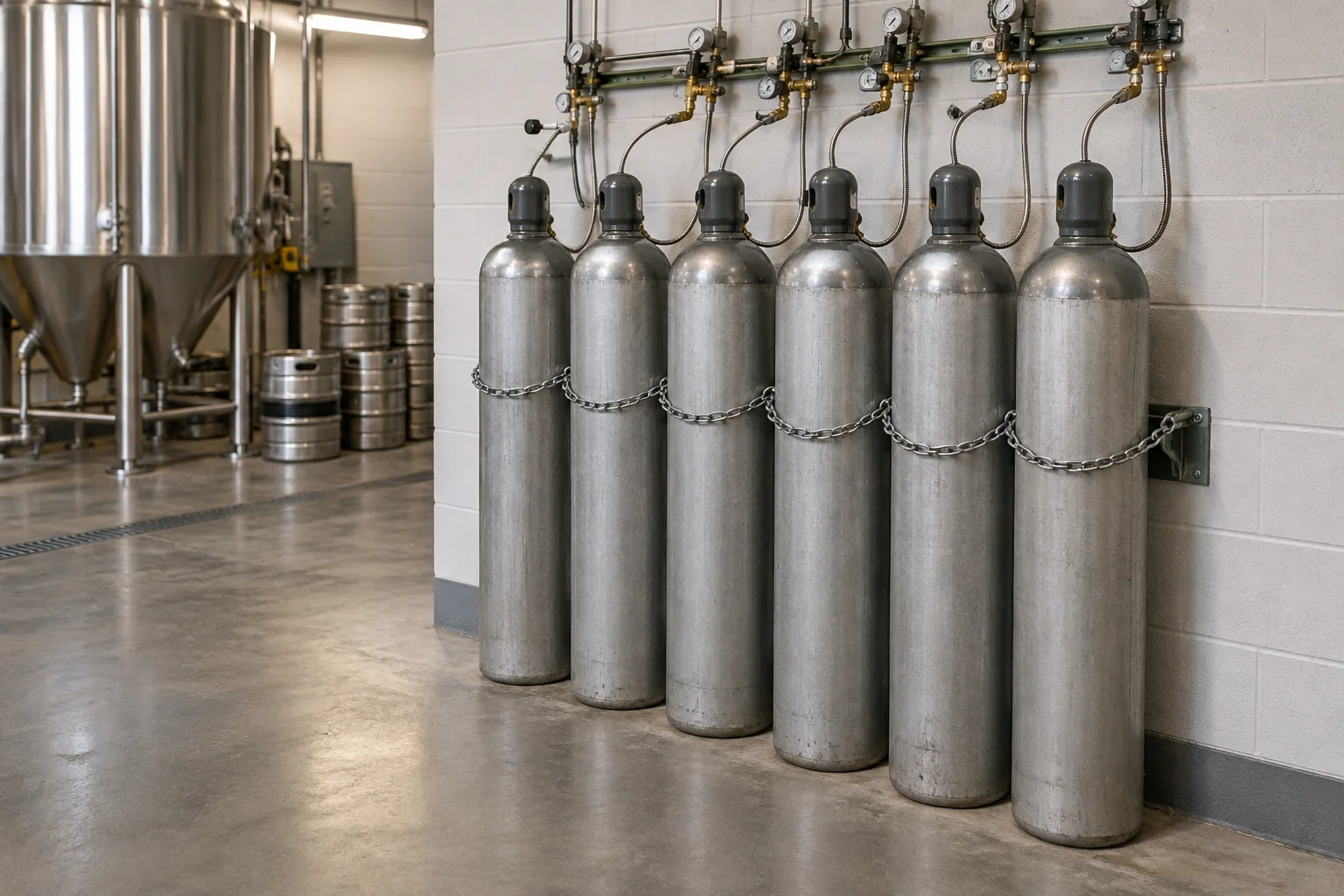
A high pressure cylinder holds carbon dioxide at room temperature in a thick-walled vessel. There is no refrigeration unit and no relief venting in normal use. Cylinders come in steel or aluminum alloy. Aluminum alloy cylinders weigh less and do not rust, which helps in damp cellars. Steel is tougher but can rust where the coating chips, so check the cylinder body and valves at every swap.
For cylinder accounts, Green CO2 Systems fills only its own cylinders, supplied by exchange, so a refill means swapping an empty for a full one.
The catch is handling. A busy venue can move many cylinders a month and needs secured space for them. The High-Pressure Micro Bulk CO2 System answers that with enclosed, semi-permanent storage, and it includes the patented DS6000 Differential Diverter Valve. Green CO2 Systems develops and assembles the system itself.
Is a low pressure CO2 tank the right setup for your venue?
A low pressure CO2 tank is the refrigerated liquid design described above. It works when three things line up: heavy CO2 use, a truck that can reach the tank, and room for it outdoors or in an enclosure.
It fits poorly in a bar with only a back room, a cellar with no truck access or a grow room with modest use. If you already own a low pressure liquid system, Green CO2 Systems fills and services it, so you do not have to tear it out to get supply.
What is the bulk liquid CO2 price compared to cylinders?
Per lb, bulk liquid CO2 usually costs less than small cylinders, because one truck moves a lot of gas per stop. Then the extras land: tank rental or lease, delivery minimums, installation and venting. Since approximately 30% or more of the CO2 paid for vents off conventional bulk systems, a low rate per lb delivered can still mean a high rate per lb used. Compare cost per lb actually used over twelve months.
How long does a liquid CO2 tank last between refills?
Divide the CO2 in the tank by your daily use, then subtract venting. A 1,000 lb tank at 20 lb a day lasts 50 days on paper. Heat and venting shorten that, and a busy weekend can too.
Either way, someone has to watch the level. CO2 Telemetry is required on every micro bulk and cylinder exchange account at Green CO2 Systems, so low levels get flagged early.
Where can you find liquid CO2 for sale and how does delivery work?
Liquid CO2 for sale comes from industrial gas suppliers with bulk delivery trucks. The driver connects to the tank's fill line and transfers liquid on site. If you are searching for a liquid CO2 tank near you, first ask which supplier will fill it and keep it serviced. A tank with no supplier is just an empty vessel.
Green CO2 Systems serves venues in Colorado, Las Vegas and Oklahoma. It delivers micro bulk CO2, runs cylinder exchange for anyone searching for a CO2 tank refill near them, and fills and services existing low pressure liquid systems. It also supplies other gases for beverages, including nitrogen and blended beer gas. Deliveries follow the levels telemetry reports. The cost of a CO2 tank refill depends on cylinder size and how often you swap, so ask for a quote.
What safety equipment and permits does a liquid CO2 tank need?
Carbon dioxide is colorless, odorless and heavier than air. A leak collects in cellars, walk-ins, pits and back rooms, so storage safety is mostly about detection and airflow. A solid setup includes:
- Fixed CO2 sensors with an alarm, mounted low near the tank and where the gas is used.
- Ventilation that brings in fresh air.
- Relief valves piped to a safe spot outdoors.
- Labeled shutoff valves staff can reach fast.
- Signs at doors and a trained crew.
- Cylinders stored upright, strapped, capped and away from heat.
Green CO2 Systems offers CO2 monitoring and alarm systems for this. Permit rules vary by city and county. Many places require a permit or fire review for a fixed tank, and the install must be in accordance with local fire code. Ask your fire authority before you buy.
Can I switch from CO2 cylinders to a liquid CO2 tank?
Yes, but pick the right target first. Total your lb of CO2 for the last three months, walk the site for truck access and ventilation, and install alarms in accordance with local code. Keep cylinders in service until the new system is filled, tested and alarmed.
How to choose: decision rules by situation
- A few cylinder swaps a month in a tight back room: stay with cylinder exchange.
- Weekly swaps and handling is a chore: choose the High-Pressure Micro Bulk CO2 System.
- You already own a low pressure liquid system: keep it, have it filled and serviced, and track the venting.
- A plant with a truck pad and very large use: a liquid CO2 tank can fit, so compare capacities and specifications with micro bulk before committing.
Our verdict for most venues
For most bars, breweries and grow rooms, go high pressure. Use cylinder exchange at lower volumes and move to the High-Pressure Micro Bulk CO2 System once swaps pile up. You skip the refrigeration unit, get enclosed, semi-permanent storage and avoid the venting that drains conventional liquid tanks. A liquid CO2 tank earns its place only at plant scale or when you already own one. Send your monthly lb of CO2 and your layout, and the team will say whether Micro Bulk CO2 Delivery or cylinder exchange fits.
Get Your Venue Matched to the Right CO2 Setup
Tell us your monthly CO2 use and layout, and we will point you to cylinder exchange, micro bulk CO2 or service for your existing liquid system. The quickest start is the Contact Us page.
Written by Green CO2 Systems
Green CO2 Systems develops and assembles its own patented equipment and supplies micro bulk CO2, nitrogen and blended beverage gas from depots in Oklahoma City, Denver, Fort Collins and Las Vegas.