
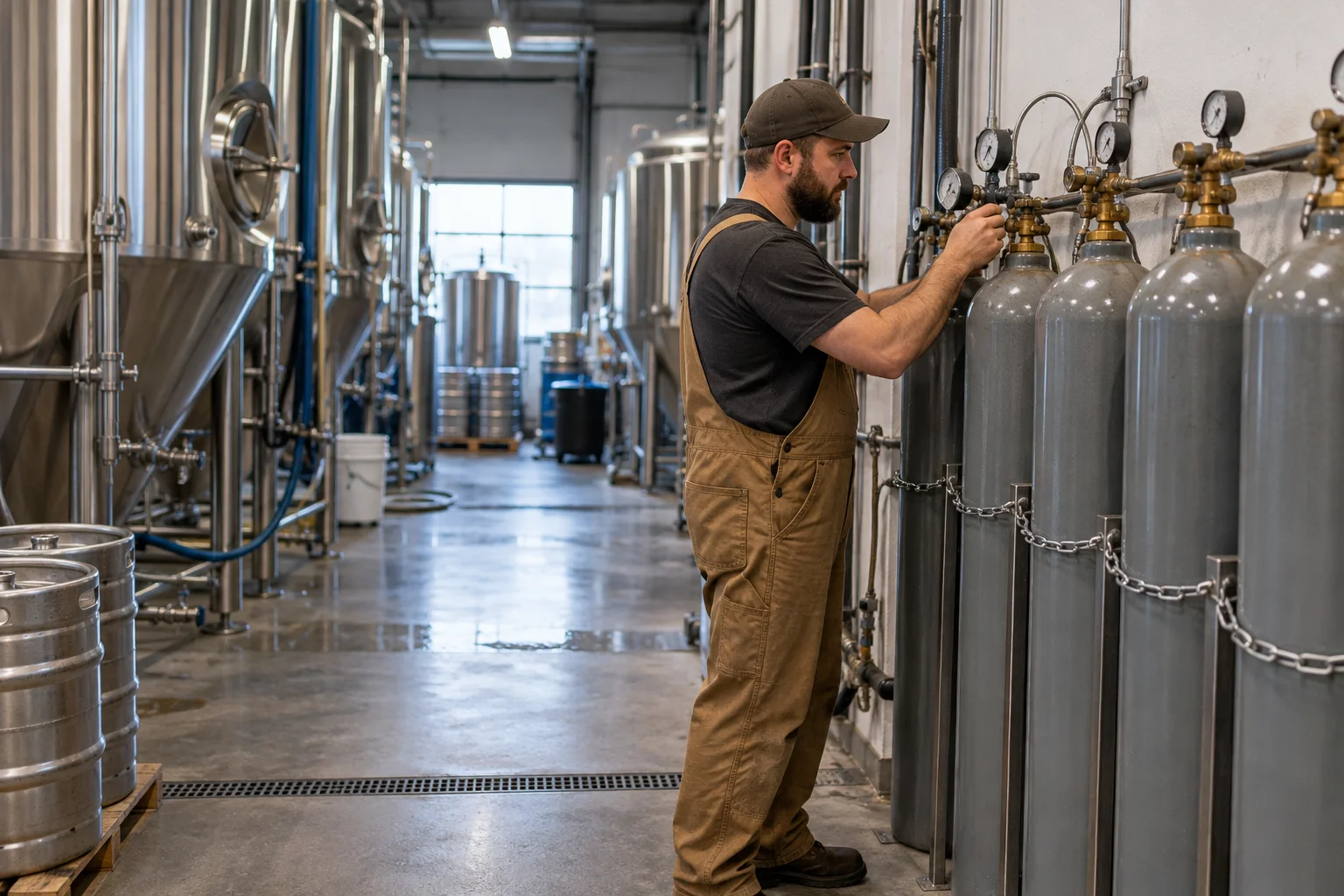
A CO2 shortage happens when carbon dioxide supply falls below demand, usually because ethanol plants, ammonia plants or gas wells slow down at the same time. For bars and breweries, it means late deliveries and tight allocations. Green CO2 Systems offers micro bulk CO2 delivery and cylinder exchange to help operators plan around it.
Is There a CO2 Shortage Right Now?
Supply changes by region and by month, so no article can give you today's status for your town. What we can describe is the pattern. U.S. carbon dioxide supply has tightened in waves, including 2018 and 2022, and the UK had a sharp crunch in 2021.
So is there a CO2 shortage where you operate? Three signs tell you faster than headlines do:
- Delivery dates start slipping, or the gap between fills grows.
- Your supplier puts you on allocation, which is a fixed cap on how much each customer can order.
- A fuel or supply surcharge shows up on an invoice.
Why Is There a CO2 Shortage?
Commercial carbon dioxide is mostly a byproduct. Producers capture it from other industrial work instead of making it on purpose, so the gas rises and falls with those industries. Why is there a CO2 shortage when the gas is in the air all around us? Capturing it from the air costs far more than capturing it from a plant that already releases it.
What Causes a CO2 Shortage?
The CO2 behind your beers and soda comes from a handful of sources, and each has its own weak point.
| Source | How it makes carbon dioxide | What can cut supply |
|---|---|---|
| Ethanol production | Fermentation at ethanol plants releases CO2 that producers capture and liquefy | Maintenance shutdowns, plant closures and weak fuel margins |
| Ammonia production | Fertilizer plants release CO2 while making ammonia | Natural gas price swings that make plants too costly to run |
| Natural wells | Underground deposits are tapped by extraction wells, such as McElmo Dome in southwest Colorado | Field maintenance and extraction limits |
| Refineries and hydrogen plants | Process units give off CO2 that can be captured | Turnarounds and unplanned outages |
| Trucks and terminals | Liquid CO2 moves by tanker from plant to depot | Driver gaps and terminal downtime in a stretched supply chain |
Timing makes it worse. Planned maintenance can take ethanol plants offline just as summer demand for soft drinks, soda, beers and other beverages starts to climb. Add a spike in natural gas prices that slows ammonia production, and the supply chain has little slack left.
How Does a CO2 Shortage Affect Bars and Breweries?
Draft beer and soda systems depend on steady carbon dioxide. When supply runs short, the first symptom is foamy or flat pours, and a soda fountain stops carbonating. Breweries use it for carbonation, for purging tanks and lines, and for packaging beers into bottles and cans, so a gap stops more than the taps.
Bars and breweries also compete with other sectors for the same product. Food processors, water treatment plants, beverage plants filling bottles, grow rooms, dry ice makers and supermarkets all draw from one pool. Operators usually feel it four ways: later deliveries, a cap on order size, surcharges, and empty cylinders with no replacement on the calendar.
Who Gets CO2 First When Supply Is Short?
In past shortages, suppliers generally protected their existing contract customers first. Uses tied to food safety and medical needs tended to rank ahead of beverages, and bars and breweries usually sat in the middle.
Will CO2 Prices Go Up During a Shortage?
Often, yes. Prices follow scarcity, trucking cost and contract terms, and suppliers may add surcharges when product is hard to source. Green CO2 Systems does not publish prices in articles, so the way to know your own cost is a quote based on your actual usage.
How Long Does a CO2 Shortage Last?
There is no fixed answer, because the cause sets the timeline. Tightness from planned maintenance usually eases as ethanol production returns, which can take weeks. A closure of ethanol production capacity or an ammonia plant, or a long run of high natural gas prices, can keep supply tight for months. Plan for months, not days.
How Can a Bar or Brewery Protect Its CO2 Supply?
You cannot control the plants or the supply chain, but you can control how exposed your back room is. Five steps help:
- Track your own usage. Note how many cylinders you empty each week, or how fast a tank drops, so you spot a change early.
- Hold a reserve sized to your delivery gap. The next section shows how.
- Stay on a standing account with a regular schedule. Existing customers are usually served first.
- Use telemetry. It is mandatory on every Green CO2 Systems bulk and cylinder exchange account, so levels are monitored and a low reading shows up early.
- Check for leaks. A slow leak at a regulator or fitting wastes gas you paid for.
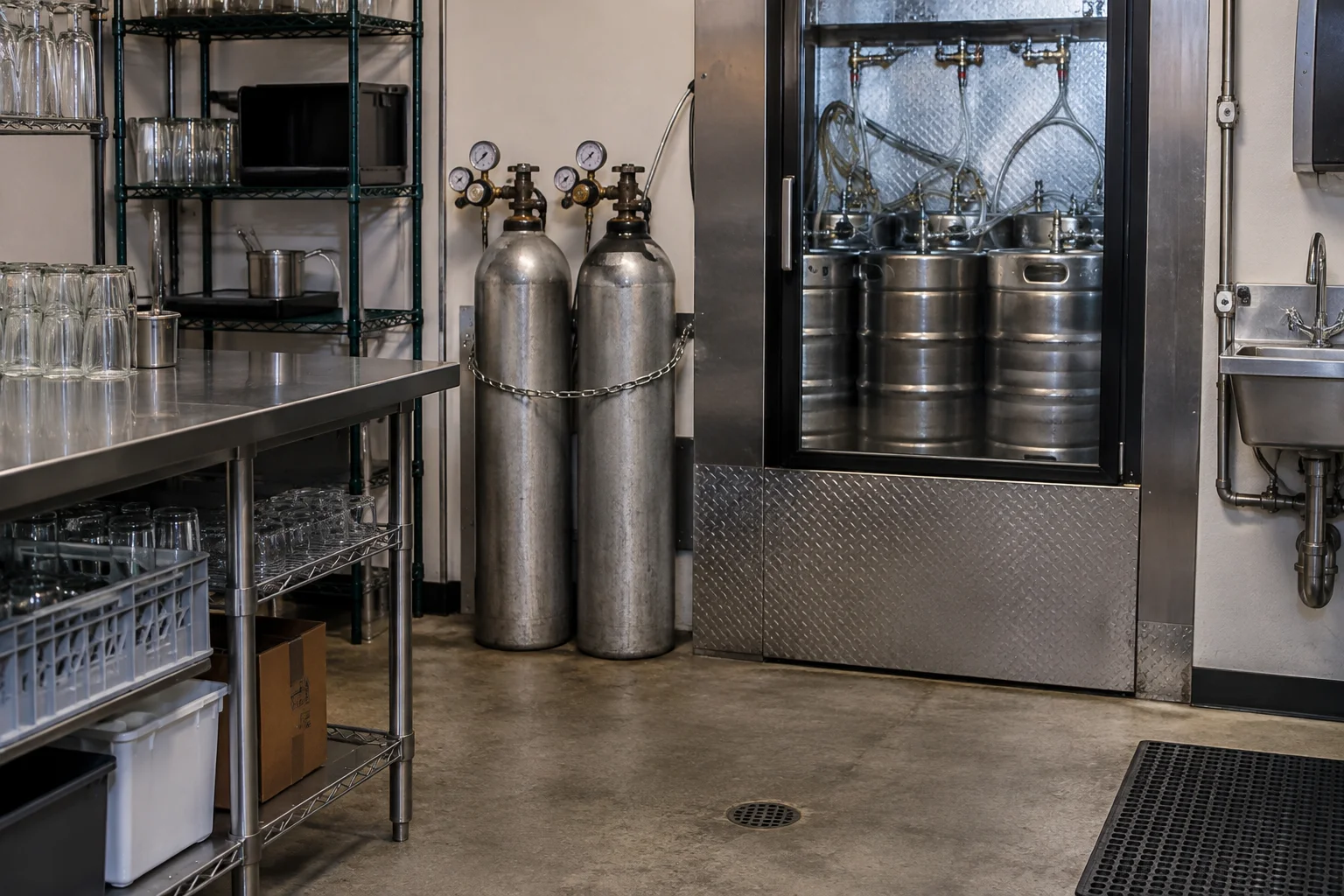
Safety matters more when you hold extra gas. CO2 is heavier than air and collects in low, closed spaces such as cellars and walk-in coolers, so keep storage ventilated, keep cylinders upright and secured, and follow local fire and safety rules. Green CO2 Systems fills only its own cylinders, supplied by exchange: you swap an empty for a full one.
How Much CO2 Should a Bar Keep in Reserve?
There is no single number. It depends on how much you use and how long your longest normal gap between deliveries runs. A workable rule is to hold enough full cylinders to cover that gap, plus a cushion for a late delivery. A bar that empties one cylinder a week and normally gets a delivery every two weeks needs two full cylinders just to cover the gap, so a third or fourth is the cushion. Count only full, secured cylinders. Space and safety limit how many you can hold, so ask your local fire authority before you add more. A reserve buys time. It does not replace a standing account and telemetry.
Should a Bar or Brewery Switch to a Micro Bulk CO2 System?
It depends on volume. Cylinder exchange suits smaller or uneven use. A micro bulk CO2 system suits steady, higher use.
| Factor | Cylinder exchange | Micro bulk CO2 system |
|---|---|---|
| How gas arrives | You swap an empty Green CO2 Systems cylinder for a full one | A delivery fills an enclosed, semi-permanent tank on site |
| Best fit | Lower or uneven use, small back rooms | Steady, higher use at busy bars, breweries and grow rooms |
| Staff time | Staff change cylinders as each one empties | Fewer changeovers |
| Monitoring | Telemetry on every account | Telemetry on every account |
| Floor space | Several cylinders racked and secured | One enclosed tank that needs a suitable location |
Conventional bulk systems vent approximately 30% or more of the CO2 paid for, which hurts most when gas is scarce. Green CO2 Systems develops and assembles the High-Pressure Micro Bulk CO2 System to address that waste, and if your use is steady, you can ask us to compare it with your current cylinders.
Can You Use Nitrogen Instead of CO2 for Draft Beer?
Only for some beers. Lagers, ales and IPAs need carbon dioxide for carbonation, and pure nitrogen would leave those draft beers flat. Stouts and other nitro-style pours run on a blend of nitrogen and CO2, so blended beer gas lowers CO2 use on those lines but does not remove it. Green CO2 Systems supplies nitrogen gas and blended beer gas alongside CO2. Soda systems need CO2 only.
Plan Your CO2 Supply Before the Next Tight Market
Our office is open Monday to Friday, 8 am to 4 pm Mountain. Tell us how much your bar or brewery uses and where your cylinders or tank sit, and the Green CO2 Systems team will talk through your options when you contact us.
Common questions
Conditions vary by region and change month to month, so the honest answer depends on the date and your location. Tight supply has hit the U.S. in waves, usually tied to plant maintenance, closures or energy price swings. The reliable test is local: watch your delivery dates and ask your supplier how current allocations look.
Mostly carbonation. Carbon dioxide carbonates fountain soda and soft drinks and pushes draft beers to the tap. Green CO2 Systems handles the gas supply side only, through cylinder exchange and micro bulk CO2 delivery for restaurants, bars, breweries and indoor grow rooms.
Common causes are slow leaks at regulators and fittings, added taps or a busy season, and on conventional bulk systems, venting. Approximately 30% or more of the CO2 paid for vents off those systems. Telemetry shows your levels over time, so a faster-than-normal drop stands out early.
Hold a reserve sized to your delivery gap, not a large stockpile. Extra cylinders take space, add risk in enclosed rooms, and local fire rules often limit how many you may store. Ask your fire authority what is allowed, then pair a modest reserve with telemetry and a standing account.
Written by Green CO2 Systems
Green CO2 Systems develops and assembles its own patented equipment and supplies micro bulk CO2, nitrogen and blended beverage gas from depots in Oklahoma City, Denver, Fort Collins and Las Vegas.