
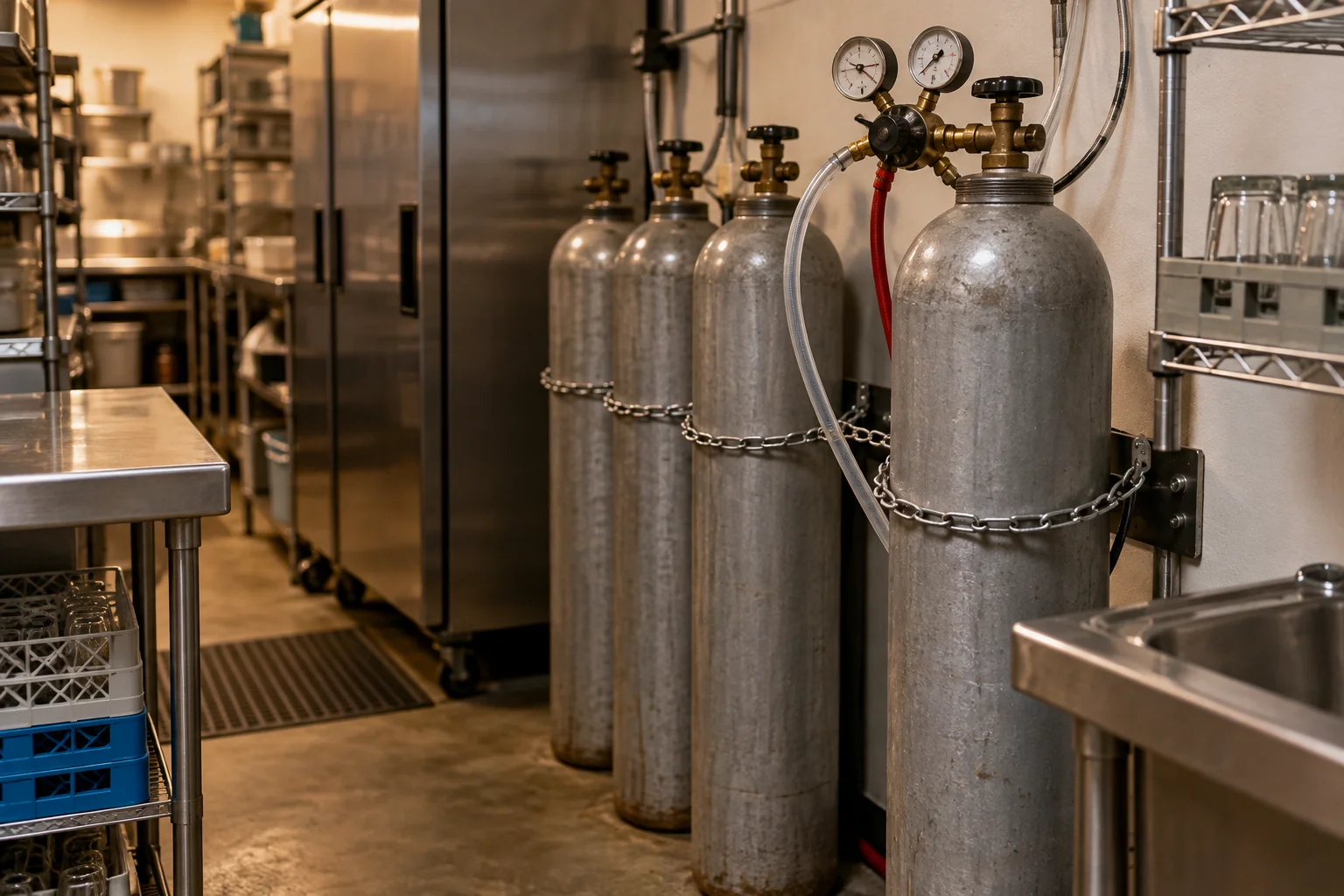
A CO2 tank expiration date is the month and year stamped into the cylinder showing when it last passed a pressure test. The gas inside never goes bad, but the metal needs CO2 cylinder recertification on a schedule, usually every five years. Here is how to read the stamp and what to do when it lapses.
Do CO2 Tanks Expire? What the CO2 Tank Expiration Date Means
Do CO2 tanks expire? Yes, but only the cylinder does. The CO2 tank expiration date is the due date for its next pressure test, and the U.S. Department of Transportation (DOT) sets that schedule. CO2 cylinders hold high pressures, so a hidden flaw in the wall is a real hazard. Testing catches thinning metal, deep dents, corrosion and worn valves before they fail. A lapsed date does not prove the tank is bad. It means nobody has proved it is good.
How to Read the CO2 Tank Date
Grab a flashlight, because paint and grime hide the stamps. Work through these five steps for each cylinder.
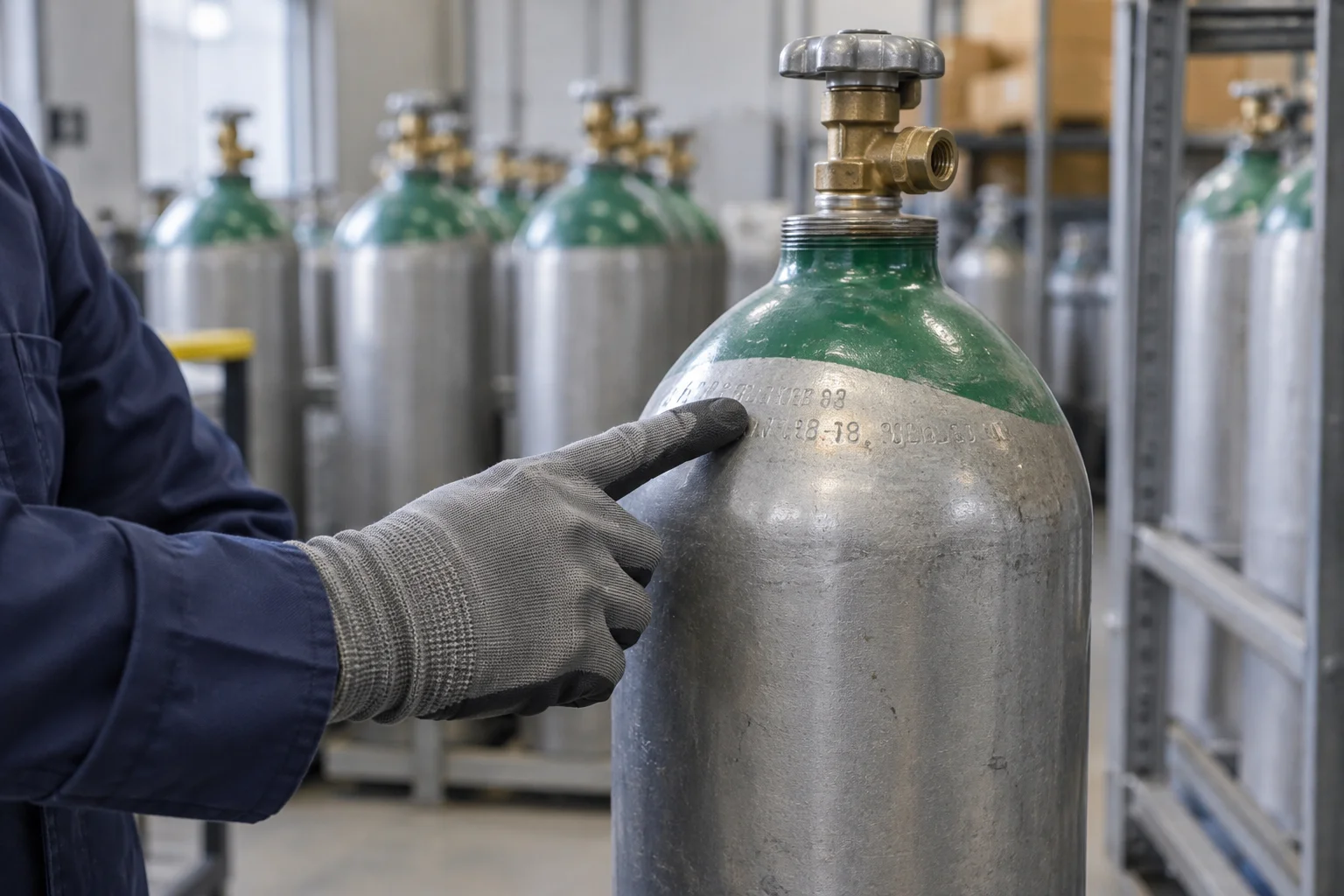
Step 1: Find the stamps on the shoulder
Look at the curved top of the cylinder, just below the valve. Read the stamped numbers, not the paper labels. Labels peel, fade and get swapped, while stamps are cut into the metal. Trust a label and you can miss an overdue tank.
Step 2: Pick out the test date
Find a month and year pair, such as 04 26 for April 2026. A small symbol beside it identifies the facility that ran the test. The earliest pair sits near the manufacturing codes. The latest pair is the one that counts.
Step 3: Look for a star
A star after a steel cylinder's date may allow a ten-year interval instead of five. No star means five years. If you can't tell, assume five.
Step 4: Add the interval and log the due month
Add the interval to the test date and write the due month down for every cylinder. A shared spreadsheet or a wall board works. Skip this and you learn the date when a driver turns the cylinder away.
Step 5: Check the valves, caps and gauges
Look over the hardware while you hold it. The valve should be tight and the protective cap should thread on clean. Regulators should hold steady, and their pressure gauges should not stick. Brush soapy water on the fittings to find a slow leak. A leak or a bent valve takes the cylinder out of service, whatever the date says. A good date, sound valves and a working regulator are the essentials.
If you would rather not track dates yourself, a CO2 Tank Refill by Cylinder Exchange account swaps an empty Green CO2 Systems cylinder for a full one that is in test, and the retest schedule stays on our side.
How Long Are CO2 Tanks Certified For?
Most CO2 cylinders are certified for five years from the last test date, and some steel cylinders with a star qualify for ten. Then they need a retest before anyone fills them again. The CO2 tank expiration date works the same way at every supplier, and the same stamped-date system covers welding gas and oxygen cylinders.
Is CO2 Tank Expiration the Same for Aluminum and Steel Cylinders?
The clock is the same in most cases. What the tester looks for differs.
| Cylinder type | Usual interval | What gets checked |
|---|---|---|
| Aluminum | 5 years | Dents, gouges, thread wear |
| Steel, no star | 5 years | Rust, pitting, wall thickness |
| Steel with star | Up to 10 years | Same checks, longer gap |
Aluminum is lighter and softer, so it shows damage sooner. Steel resists dents but rusts where moisture sits. Welding repair is never an option on a damaged wall. That cylinder gets retired.
Can You Refill or Use a CO2 Tank Past Its Test Date?
No. Federal DOT rules bar anyone from filling a cylinder whose retest is overdue, and a careful supplier will turn it away. Using one you already have on site is no better. The gas is fine, but nobody has checked the metal at high pressures. Fire and insurance inspections may flag it too.
What an Expired CO2 Tank Means for Your Business
Picture a bar on a Friday night. The supplier refuses the refills, the soda gun pours flat, and draft beer loses its bubbles. Carbonation drops across every beverage you serve. A brewery cellar or grow room hits the same wall when a cylinder can't go back into service. Add the safety risk of an overdue tank sitting in a back room, and a missed CO2 tank expiration date costs you downtime, not just paperwork.
Who Tracks CO2 Tank Test Dates at a Restaurant or Bar?
Whoever owns the cylinder. If you own it, name one person, such as the bar manager or kitchen lead, and put a monthly date check on their list. That check is not optional. If the supplier owns the cylinder, as with our cylinder exchanges, the retest schedule is on the supplier. Even then, glance at the stamp when a new cylinder arrives. Restaurants serving carbonated beverages depend on exchange cylinders that arrive in test.
CO2 Cylinder Expiration: Does the Gas Itself Go Bad?
No. Carbon dioxide is a stable gas, and it does not expire in a sealed cylinder. CO2 cylinder expiration is about the steel or aluminum shell and the valves, never the gas. So if your soda tastes flat or the bubbles look weak, don't blame old gas. Check for an empty cylinder first, then a leak at a fitting, then the regulators and valves. A true CO2 tank expiration problem shows up as a missed date, not a bad flavor.
How Do You Get an Expired CO2 Tank Retested?
Pull it out of service first. Close the valve, put the cap on, and tag it so no one reconnects it. Then:
- Confirm the date from the stamp, not the label.
- Ask the cylinder's owner who handles retesting.
- Send it to a registered testing facility, which stamps a new date if the cylinder passes.
In Colorado, Green CO2 Systems offers ultrasonic cylinder testing, which uses sound waves to check the cylinder wall. Cylinder testing is offered in Colorado only. Elsewhere, a registered testing facility near you handles the retest, or you can move to Green CO2 Systems cylinder exchange, available in every market we serve, and let the supplier keep the cylinders in test.
A few mistakes fail inspections again and again: trusting a label over the stamp, storing an overdue tank beside full ones so it gets used by mistake, and trying a welding repair. A retest is not optional, and pressure work belongs to trained professionals.
Get Your CO2 Cylinder Dates Under Control
Tell us where you operate and what the stamps on your cylinders say, and we will point you to the right next step, Monday to Friday, 8 am to 4 pm Mountain, through Contact Us.
Common questions
Pressure gauges on a CO2 cylinder read the same until the liquid is almost gone, so they will not show how full it is. Weigh the cylinder and subtract the tare weight (TW) stamped on the shoulder. A sudden gauge drop means it is nearly empty, so plan the swap before that happens.
Yes, heat or damage can make a cylinder fail. Store each one upright, chained to a wall or rack, with the cap on and the valve closed. Keep them in a ventilated space away from heat, below 125°F as the Compressed Gas Association advises. Check your local fire codes for storage rules.
Carbon dioxide has no smell or color, and it pushes out oxygen in a closed room, so a leak can build unnoticed. Exact alarm levels depend on your local code, so ask your fire marshal. Install CO2 monitors in any enclosed storage room, and treat a hiss as a reason to leave and ventilate.
Return them to the owner or supplier. Close the valve, put the cap on and mark the cylinder out of test. Never trash or scrap one yourself, because even empty cylinders hold pressure. If you own it, a testing facility can retest it or retire it safely.
Written by Green CO2 Systems
Green CO2 Systems develops and assembles its own patented equipment and supplies micro bulk CO2, nitrogen and blended beverage gas from depots in Oklahoma City, Denver, Fort Collins and Las Vegas.