
Skip to content
Green CO2 Systems

CO2 cost calculator

A co2 cost calculator is only useful if it counts the gas you never used. Most operators know their invoice total and have no idea what fraction of it reached a glass.

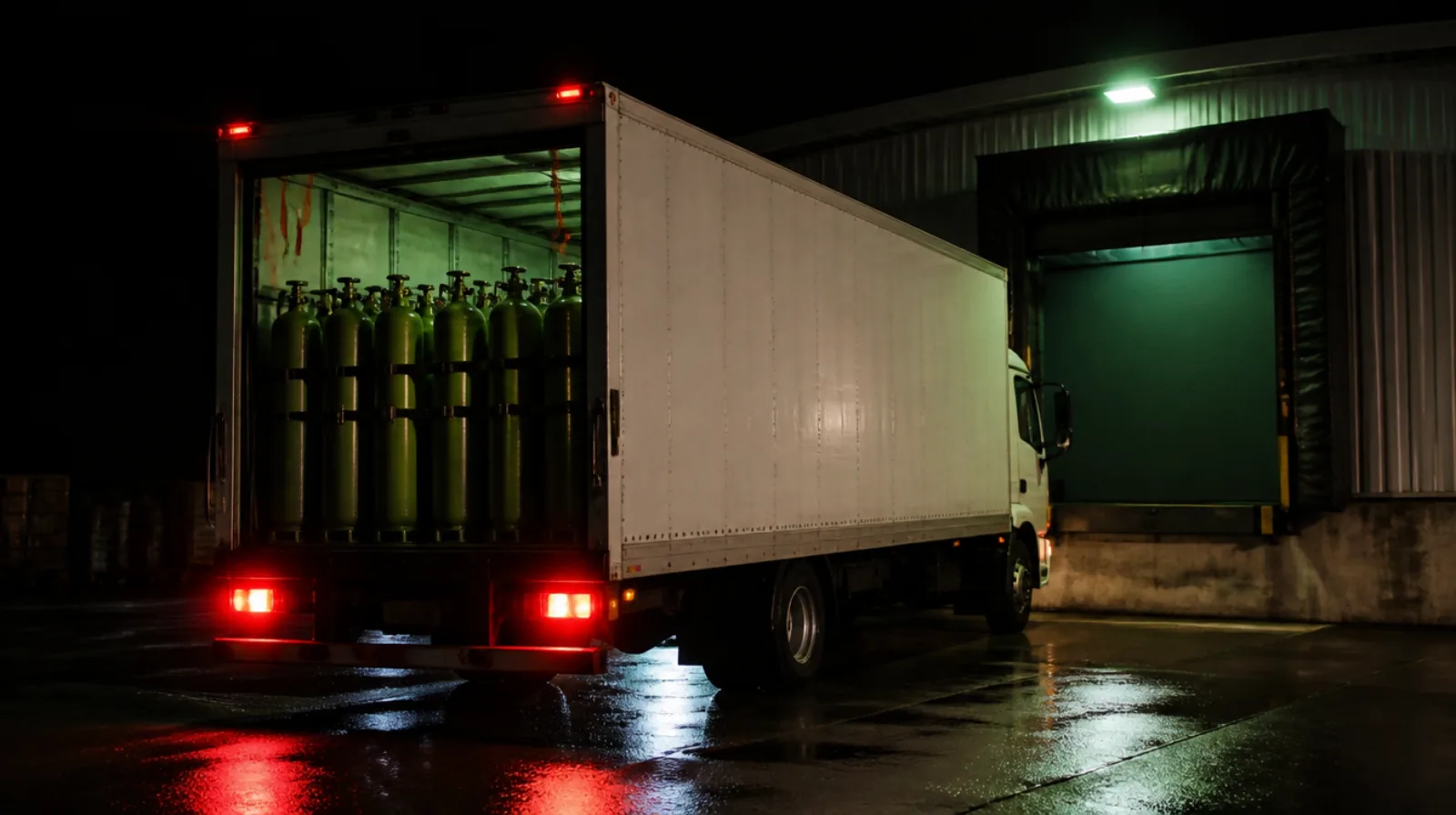
A white box delivery truck backed up to a loading dock at night, rear door open showing upright gas cylinders strapped inside.

The four numbers to gather

Pull these together before you can work out anything meaningful. Your invoices have most of them.

Delivered volume
Total pounds or cylinders delivered over a representative period
Total spend
What you actually paid over that period, including delivery and rental
System type
Cylinders, low-pressure cryogenic bulk, or high-pressure enclosed bulk
Turnover rate
How long a delivery typically sits before it is used
Run your own numbers

Use figures from your own invoices. Nothing here is sent anywhere, and no prices of ours are assumed.

Invoice rate per pound
$0.90
Pounds lost before use, per month
250 lb
Real cost per usable pound
$1.20
Premium over the invoice rate
+33%

At these figures, about $2,700.00 of your annual spend buys gas you never dispense. Assumption: 25% of each delivery is lost on a conventional low-pressure bulk system. The conventional bulk default reflects the venting figure on our homepage (approximately 30% or more); change it to match what you measure. The free assessment replaces the assumption with your actual usage.

The calculation that shows what you actually use

Delivered volume minus dispensed volume equals loss. On a cylinder system that loss is small. On a conventional low-pressure bulk system it is not, because the system vents continuously as pressure builds, and it vents most when turnover is slowest. An enclosed high pressure CO2 system has no routine venting cycle, so that gap closes.

That loss can be approximately 30 percent or more of a delivery. If your effective cost per usable pound is a third higher than your invoiced cost per pound, a cheaper headline rate has not saved you anything.

Speak with a Territory Sales Manager

You will get back a real cost per usable pound and what an enclosed system would change.

Add the costs that never appear on a gas invoice

Gas is only part of what your current arrangement costs.

  • Staff time handling, moving and changing cylinders
  • Storage space given over to full and empty bottles
  • Emergency deliveries outside the schedule, and what they cost
  • Service interruption when you run dry at peak
  • Product waste and comped drinks when carbonation goes wrong

Then compare like for like

Compare cost per usable pound, not cost per delivered pound, and include the operational costs above. That is the comparison that reflects what you actually spend to keep gas flowing.

We run exactly this calculation as part of the free assessment, using your invoices and your measured consumption rather than assumptions.

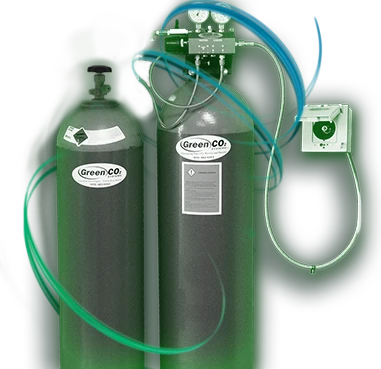
The Green CO2 Systems high-pressure micro bulk CO2 system: two tall green high pressure cylinders with Green CO2 labels, a gauge manifold on top and an outside fill box on the wall.
The high-pressure micro bulk CO2 system with its outside fill box.

What a CO2 usage calculator should count

A CO2 usage calculator that only divides spend by delivered pounds tells you your invoice rate, not your commercial CO2 cost. The number that matters is cost per pound you actually dispensed.

Divide total spend by dispensed volume rather than delivered volume, then add the handling, storage and downtime the gas invoice never shows.

Worked example

Numbers make this concrete. Take a venue buying 1,000 lb of CO2 a month on a conventional low-pressure bulk system, and assume a 25 percent venting loss, which is within the range we routinely measure.

Delivered and invoiced each month

1,000 lb

Delivered and invoiced each month

Lost to venting before use

250 lb

Lost to venting before use

Actually dispensed

750 lb

Actually dispensed

Real cost per usable pound versus the invoice rate

+33%

Real cost per usable pound versus the invoice rate

The costs that never appear on a gas invoice

Gas is only part of what a supply arrangement costs. These are the lines that sit in payroll, in comps, and in lost service rather than in the invoice you compare.

Staff handling time

Ordering, receiving, moving, changing and returning cylinders. On a busy site this is hours a week, and it is usually your most experienced person doing it mid-service.

Storage space

Floor area given over to full and empty bottles, in buildings where floor area is the most expensive thing you have.

Emergency deliveries

Out-of-schedule runs cost money with any supplier. A schedule built from measured usage is what makes them rare.

Lost service

A dry keg line at peak. This is almost always the largest number and the one nobody puts in the comparison.

Common questions

The headline rate varies by market, volume and distance from a depot, and on its own it is not the useful number. Cost per usable pound after venting loss is what actually determines your spend.

Compare delivered volume with dispensed volume over a period. If you cannot measure dispensed volume, the gap between what you buy and what your sales imply is a reasonable proxy, and it is one of the things the assessment measures.

Send us your invoices and we will run the numbers

You will get back a real cost per usable pound and what an enclosed system would change.

Call 877-CO2-FOR-UFree assessment