
Skip to content
Green CO2 Systems

CO2 monitoring in Fort Collins

CO2 monitoring in Fort Collins usually starts with a permit question, because fire permits here run through Poudre Fire Authority rather than the city building department. We install and service the sensors, alarms and shutoffs a brewery cellar, restaurant back room or grow room needs, and prepare the details your PFA review will ask for.

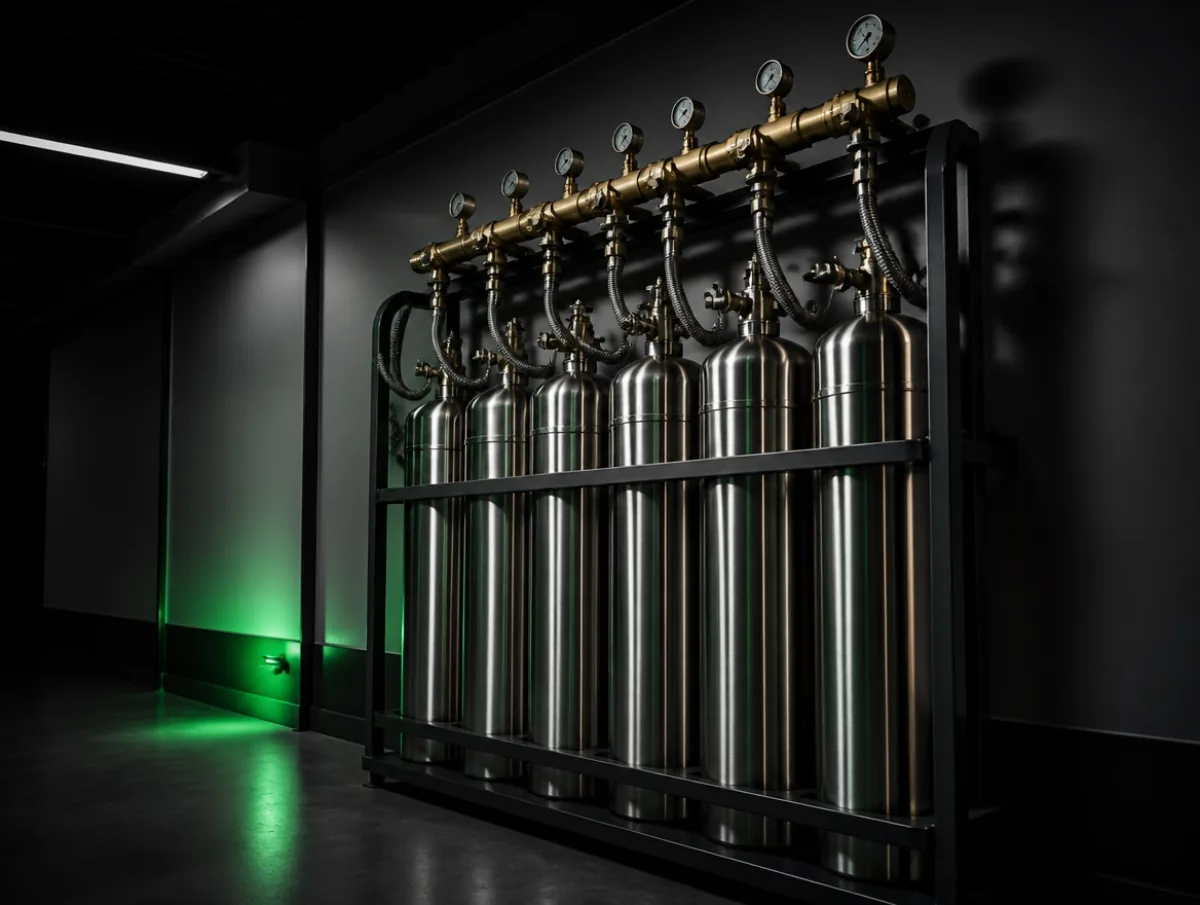
A bank of polished stainless steel high pressure CO2 cylinders in a steel frame, connected by braided hoses to a brass manifold with pressure gauges.

Which code your Fort Collins system is checked against

Fort Collins replaced the 2021 International Fire Code with the 2024 edition through Ordinance No. 051, 2025, carrying local amendments recommended by the Poudre Fire Authority board. A project permitted under the older code may still be reviewed against it, so we confirm the edition with PFA rather than assume.

In both editions the CO2 rules sit in Section 5307: indoor CO2 storage needs ventilation or gas detection, and CO2 enrichment systems over 100 pounds need sensors within 12 inches of the floor, alarms at 5,000 and 30,000 ppm, and an automatic stop to the gas supply.
Life safety

A CO2 alarm in Fort Collins brewery cellars

Brewing produces CO2 as well as consuming it, so a brewery cellar can collect gas from fermentation on top of whatever leaks from storage. A CO2 alarm in Fort Collins breweries belongs low, near tanks and storage, where the gas settles.

The LogiCO2 MK9 shuts off the supply at 5,000 ppm with strobe and horn outputs, and a central unit ties up to 12 sensors together for a building with a cellar, a cold room and a taproom.

Speak with a Territory Sales Manager

We look at your current setup and usage and tell you what a right-sized system would cost to run.

Where to put a CO2 detector in Fort Collins sites

Placement is a survey job, not a guess. We walk the site and put each CO2 detector in Fort Collins buildings where the gas will actually pool: cellars, walk-in coolers, plant rooms and the floor of any room with storage or dispensing. A wall unit at eye height is the most common mistake we find on systems we take over.

  • Survey-based sensor placement at collection height
  • Life-safety shutoff at 5,000 ppm
  • Strobe and horn outputs for occupied rooms
  • Documentation for your Poudre Fire Authority review
  • Sensor servicing and replacement as part of the account

Fermentation adds CO2 that storage does not

A restaurant's CO2 risk comes from its storage and lines. A brewery has a second source: yeast turns sugar into alcohol and carbon dioxide, and an active fermenter releases that CO2 into the room unless it is captured or vented outside. In a closed cellar on a busy brewing week, fermentation can raise CO2 levels with no leak anywhere in the gas system.

That is why we survey a brewery differently. Sensors go near fermenters and brite tanks as well as near the CO2 supply, and the alarm thresholds are set so a normal fermentation day does not trigger nuisance alarms while a real buildup still does.

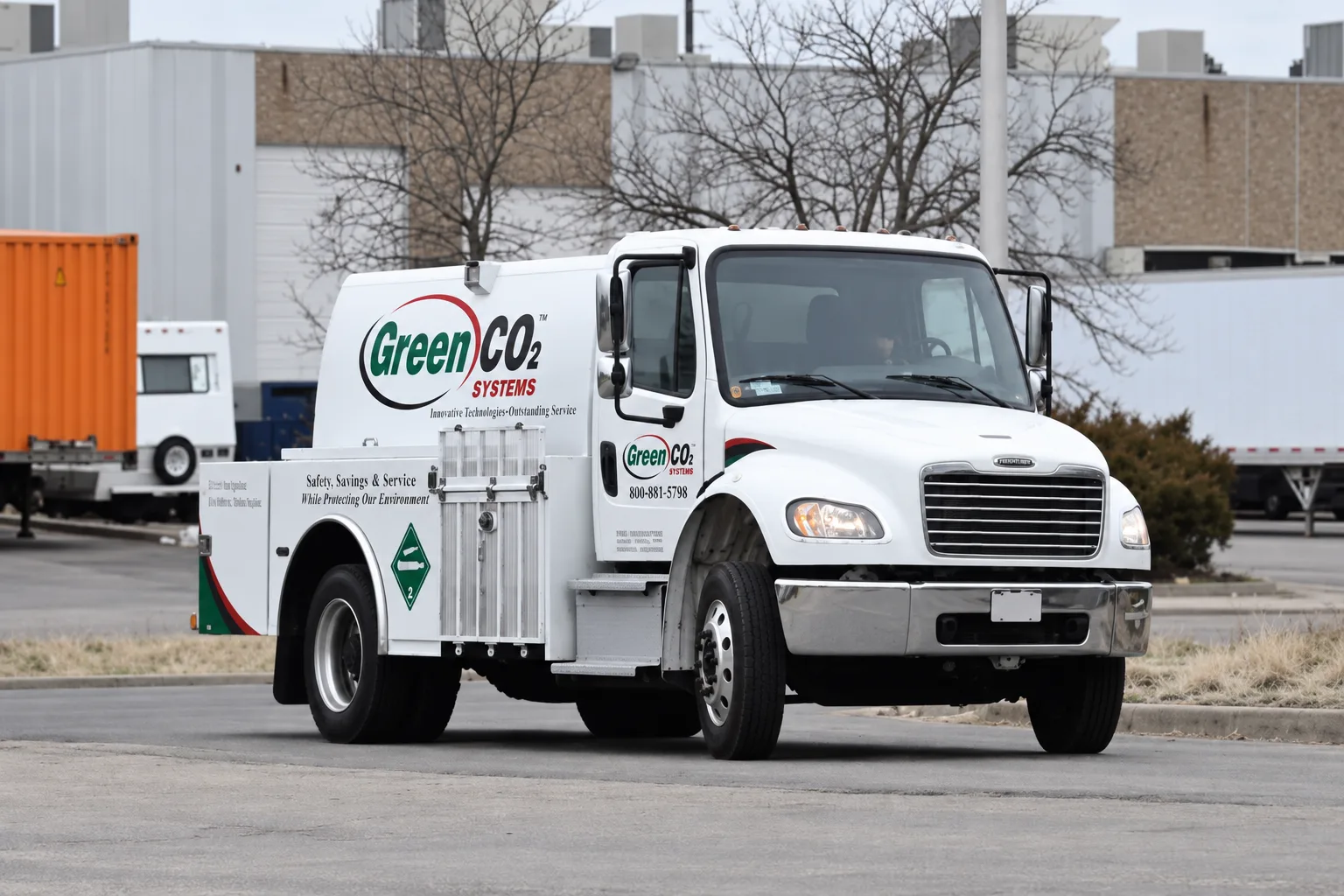
A white Green CO2 Systems delivery truck with the green and red logo on the door, pulling out of an industrial lot.
A Green CO2 Systems truck on a route. Deliveries fill your system from an outside box, so nobody comes through the dining room.

One system for a brewhouse, cellar and taproom

A typical Northern Colorado brewery has three or four rooms with different risks: the brewhouse, the cellar, a cold room and the taproom's keg cooler. The LogiCO2 Central Unit runs up to 12 MK9 sensors from one control point with live readings, so the whole building is one system with one alarm panel rather than separate boxes nobody checks.

  • Fermenter and brite tank areas in the cellar
  • The CO2 supply and any manifold or bulk storage
  • Cold rooms and keg coolers with gas lines
  • Below-grade rooms and pits where CO2 settles

What we prepare for a Poudre Fire Authority review

For a new or modified CO2 system we put together the details a fire plan review asks about: how much CO2 is stored and where, the equipment and its pressure relief, the sensor locations and heights, the alarm thresholds and what each alarm does, and how the supply shuts off. Having that in one place is what keeps a review from bouncing back.

After the install, sensors are serviced and replaced on a schedule as part of the account, because a sensor that has drifted is worse than one that is obviously dead.

Common questions

Poudre Fire Authority handles fire permits and plan reviews for Fort Collins. We supply the system and monitoring details the review needs.

Fermentation releases CO2 into cellars on its own, so it is worth monitoring regardless. What your permit strictly requires depends on your system and storage, which we check with you.

No. Carbon monoxide and carbon dioxide are different gases, and a household CO alarm does not measure CO2 or drive a supply shutoff.

It can, in a closed cellar during heavy fermentation. Sensor placement and thresholds are set during the survey so routine fermentation does not cause nuisance alarms while a real buildup still triggers them.

Get a free CO2 assessment in Fort Collins

We look at your current setup and usage and tell you what a right-sized system would cost to run.

Call 877-CO2-FOR-UFree assessment