
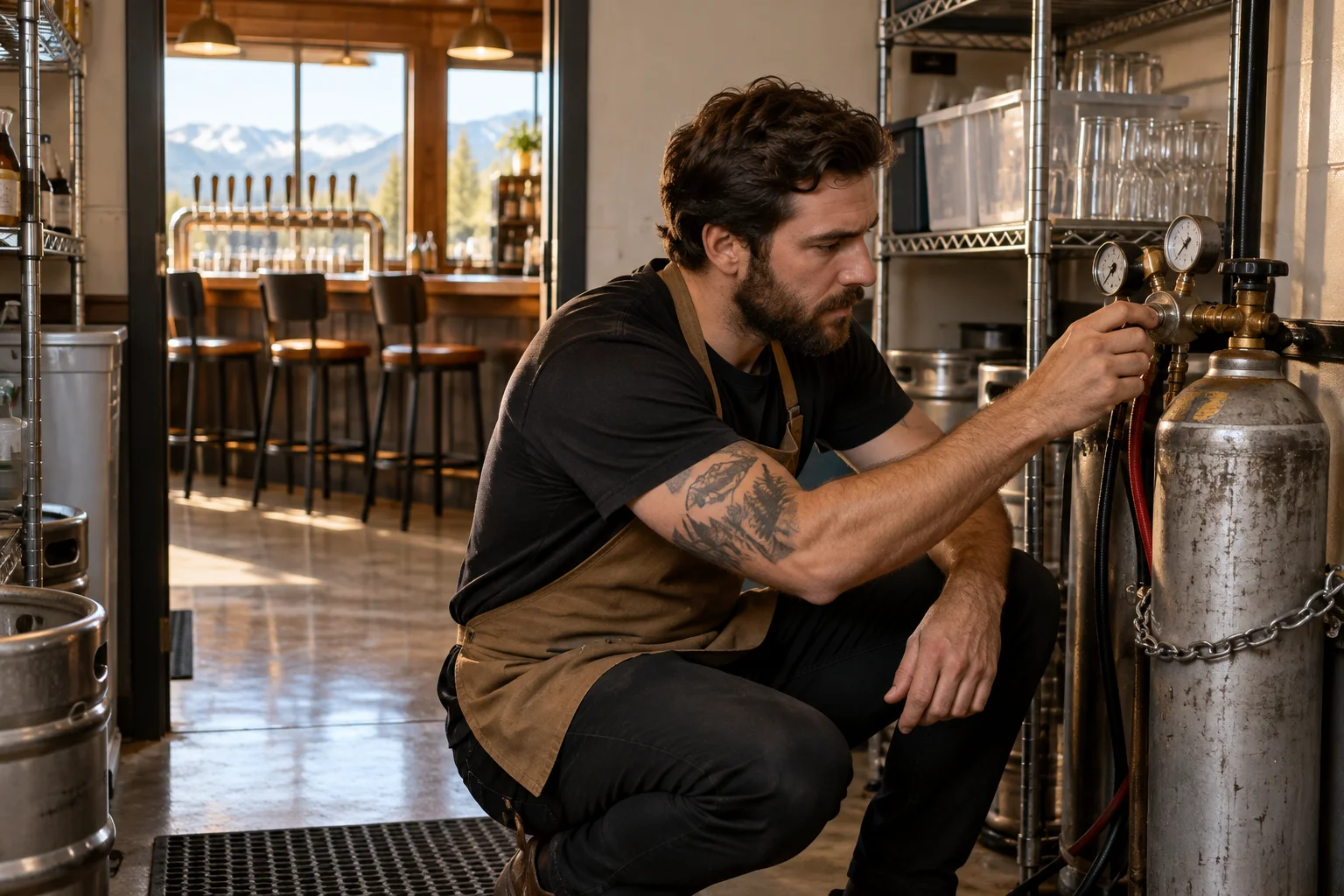
A bar opening checklist for beverage gas covers four things: a full cylinder on every system, a leak check, a gauge reading before doors open, and a plan for swapping cylinders. Green CO2 Systems supplies CO2 for Bars and Restaurants by cylinder exchange, and this guide shows how to run each step.
What should be on a bar opening checklist for beverage gas?
Most bar opening checklists sort tasks into groups: facility and environment, bar station and glassware, garnishes and mixes, inventory, and cash and POS setup. Gas belongs in two of them. It is a facility item (cylinders, storage, leak safety) and an inventory item (which cylinders are full, half or empty).
Four checks cover it: read each gauge, confirm a full spare, check fittings for leaks, and secure every cylinder upright. Log anything odd for the closing checklist.
What are the bar opening procedures for CO2 and nitrogen systems each day?
Bar opening procedures for gas take about ten minutes. The opening bar team runs these tasks before the first pour, in this order:
- Read the gauge on every cylinder in use. Write the number on the log.
- Confirm a full spare is on site for each gas, and note your spare stocks on the log. CO2 and nitrogen each need their own. Without a spare, an empty cylinder mid-shift stops the beers or the soda.
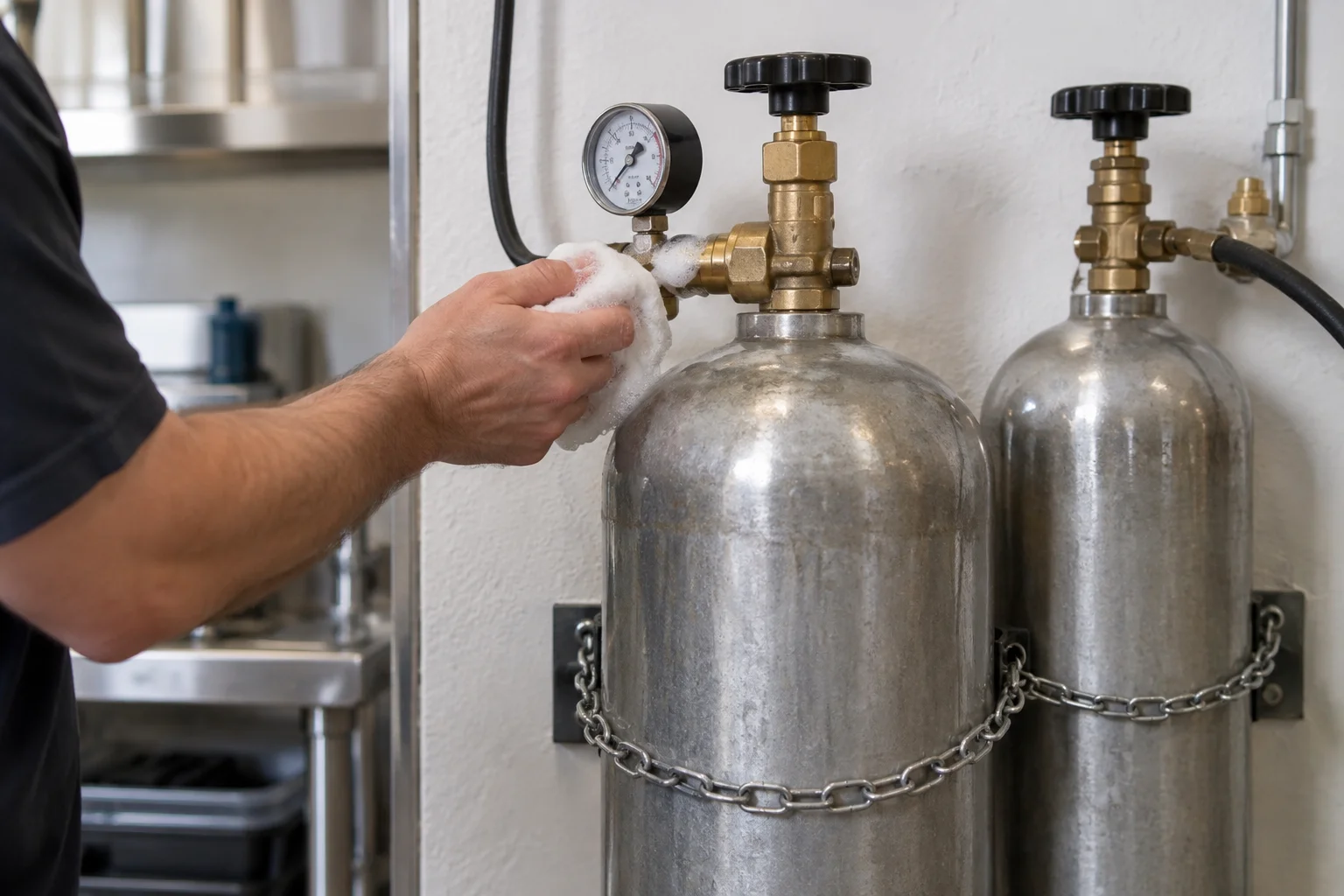
- Check fittings for leaks. CO2 has no smell, so listen for a hiss, then wipe soapy water on each fitting. Bubbles mark a leak.
- Check that every cylinder is chained or strapped upright. A cylinder that falls can break its valve.
- Pour a test beer at each tap. Flat or foamy pours point to gas first, then to temperature or lines, which your draft installer handles.
- Check the telemetry reading. Telemetry is required on every Green CO2 Systems cylinder exchange account and tracks levels between visits. The gauge and the screen should tell the same story.
Green CO2 Systems sets up cylinder exchange accounts, with telemetry, sized to your tap count through our Beverage Gas Supply service.
What goes on a bar preparation checklist for draft beer and soda?
A bar preparation checklist covers everything the bartender sets before doors open: glassware, garnishes, bottles, liquor, wells and gas. Add these gas tasks to it and to any other checklists your opening shifts use:
- Pour a test soda at each of the wells. Flat soda usually means low CO2 or a loose connection.
- Check the nitrogen line for stout and nitro beers. These run on nitrogen or a blended beer gas, not straight CO2. Label every cylinder and regulator by gas so nobody connects the wrong one.
- Keep the cylinder area clear and clean. Bins, garnish containers and stools should never lean on cylinders or block the path to them.
What belongs on a bar management checklist for beverage gas?
The bar management checklist sits above the daily routines, including the opening and closing routines, and the shift checklists. The manager owns it and its weekly and monthly tasks:
- Review the gas log and telemetry trend, and schedule exchanges around busy shifts such as game nights and events.
- Count gas stocks with the inventory. Full, in-use and empty cylinders sit next to kegs and liquor on the count sheet.
- Walk the storage area for cleanliness, clear access, upright cylinders, and no bins or stacked cases in the way.
- Check the closing checklist: a final gauge reading, a note on any low cylinder, and a shut storage door.
How do you set up CO2 and nitrogen for a new bar or restaurant?
Start with a count of taps, soda wells and nitro lines. Then work through the setup:
- Match the gas to the system. CO2 serves beer and soda. Stout and nitro beers use nitrogen or a blended beer gas.
- Pick a storage spot. Choose a ventilated place away from heat with room to chain cylinders. Ask your local fire marshal what applies, because code rules vary by city.
- Open an exchange account. Green CO2 Systems fills its own cylinders and supplies them by exchange, so a refill means swapping an empty cylinder for a full one, with telemetry on the account.
- Have your draft installer connect and pressure-test the system.
- Run a leak check and a test pour, then add the results to your bar opening checklist before opening night.
- Train staff across all shifts on the gauge, the log, the daily routines and who to call.
How many CO2 cylinders does a new bar or restaurant need?
It depends on how much you pour. Most bars start with one cylinder in service and one full spare for each gas. The table shows what moves that number.
| What you have | How it changes the cylinder count |
|---|---|
| Number of taps | More taps draw more gas |
| Soda wells | Each well adds CO2 demand |
| Nitro or stout lines | Need their own nitrogen or blended gas cylinder |
| Event and game-night volume | Full tables mean faster use, so more spares make sense |
| Storage space | Limits how many cylinders fit safely |
How often should staff check CO2 levels at a bar?
Read every gauge at opening each day, again before a known rush, and once more when you complete the closing checklist. Walk the fittings with soapy water weekly. Telemetry covers the gaps between readings and shows when your stocks run low, but it does not replace a person looking at the gauge.
How do you safely change a CO2 cylinder at a bar?
Only trained staff should change a cylinder. Follow the procedure your draft installer set for your system, which generally runs like this:
- Close the valve on the empty cylinder.
- Relieve line pressure the way you were trained.
- Disconnect, then move the cylinder with a hand truck. Never roll or drag it.
- Secure the full cylinder upright with a chain or strap.
- Reconnect, open the valve slowly, and wipe soapy water on the fittings to check for leaks.
- Log the swap, update the cylinder inventory, and add it to the closing checklist.
If you smell or hear anything unusual in a cellar or walk-in, leave the room and ventilate it. CO2 is heavier than air and collects in low spaces.
Do bars and restaurants need a CO2 leak detector?
Many do, and it is a sensible choice for any cellar, walk-in or basement storage. CO2 has no odor, so a slow leak in a closed room goes unnoticed. Whether a detector is required depends on your local fire code and your layout, so confirm it with your fire marshal. Green CO2 Systems also offers CO2 monitoring and alarm systems.
Get Your Gas Setup Ready Before Opening Night
Send your tap count, soda wells and storage layout so Green CO2 Systems can plan your cylinder exchange and telemetry. Office hours are Monday to Friday, 8 am to 4 pm Mountain, and you can start through Contact Us.
Written by Green CO2 Systems
Green CO2 Systems develops and assembles its own patented equipment and supplies micro bulk CO2, nitrogen and blended beverage gas from depots in Oklahoma City, Denver, Fort Collins and Las Vegas.