
Skip to content
Green CO2 Systems

CO2 monitoring in Denver

CO2 monitoring in Denver is written into the fire code your inspector works from. The 2025 Denver Building and Fire Code, in force since December 31, 2025, is built on the 2024 International Fire Code, whose compressed gas chapter covers CO2 systems in restaurants, breweries and grow rooms. We install the sensors, alarms and shutoffs that chapter describes and service them afterward.

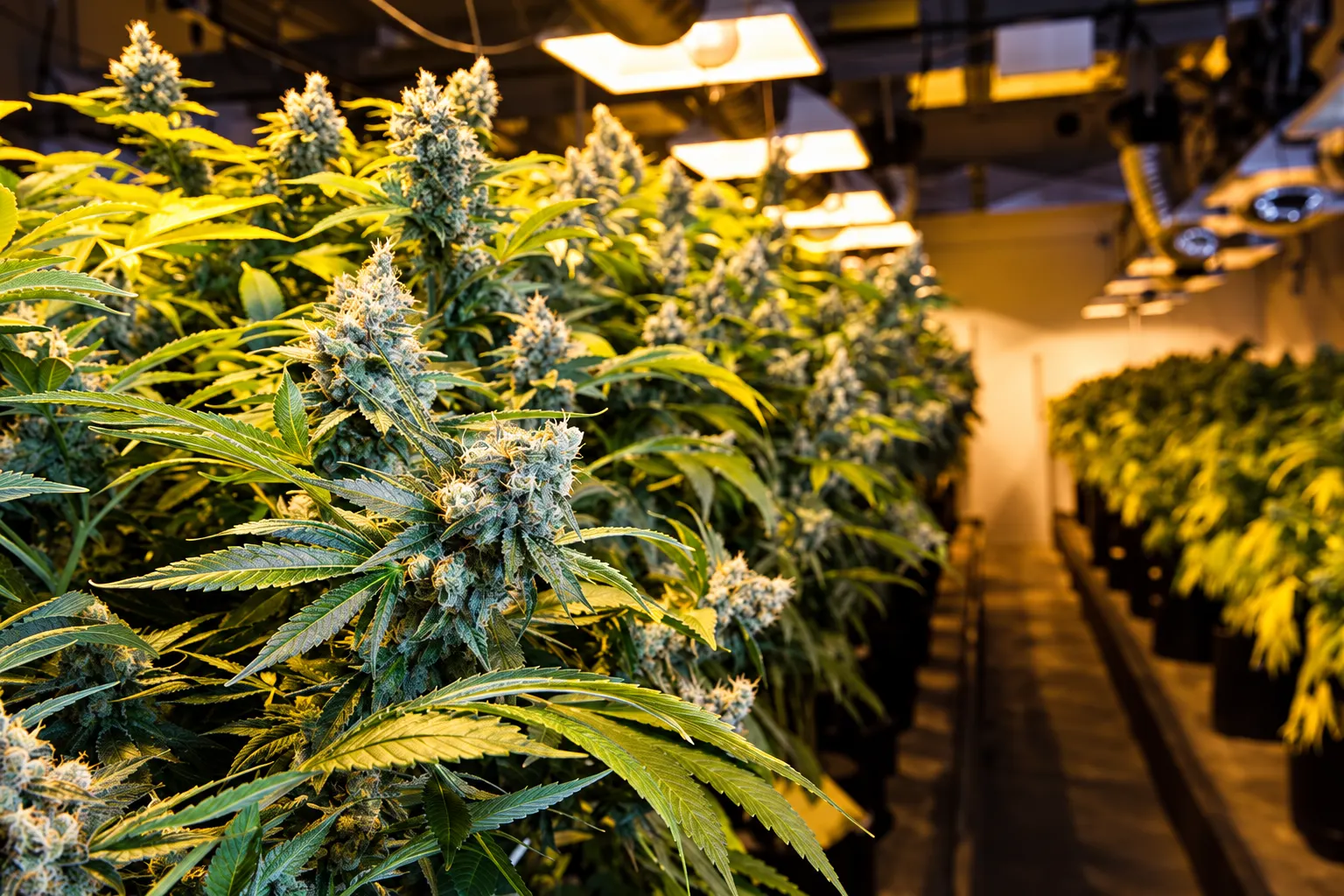
Flowering cannabis plants in a long indoor grow room under rows of grow lights.

What the fire code asks of a Denver CO2 system

Section 5307 of the International Fire Code deals with CO2 systems. Indoor CO2 storage needs ventilation or a gas detection system. CO2 enrichment systems holding more than 100 pounds, the kind that feed a grow room, need gas detection with sensors within 12 inches of the floor, a low-level alarm at 5,000 ppm and a high-level alarm at 30,000 ppm, and the alarm has to stop the flow of CO2 into the piping.

Denver amends the international code in places, and your fire inspector has the final say on configuration. We design to the adopted code and leave you with documentation that shows what is installed, where, and at what thresholds.
Life safety

Choosing a CO2 alarm in Denver for a grow room or a cellar

Denver's licensed indoor cultivation sector and its bar and brewery cellars share one hazard: CO2 is heavier than air and pools at floor level in exactly the rooms where people work alone. A CO2 alarm in Denver for those rooms belongs low, near storage and dispensing points, not at head height where a wall unit is convenient to mount.

The LogiCO2 MK9 sensor drives a life-safety shutoff at 5,000 ppm with strobe and horn outputs, and the LogiCO2 Central Unit runs up to 12 sensors from one point for a multi-room facility.

Speak with a Territory Sales Manager

We look at your current setup and usage and tell you what a right-sized system would cost to run.

A CO2 detector in Denver is not a carbon monoxide detector

Many people who search for a CO2 detector in Denver actually want a carbon monoxide alarm for a home. That is a different gas and a different device. A commercial CO2 sensor measures carbon dioxide in parts per million and is wired to an alarm and a shutoff; a household CO alarm is not built for that job and will not satisfy an inspector.

Grow rooms: enrichment and safety on one plan

A cultivation room wants CO2 between roughly 700 and 2,000 ppm during the light cycle, which our grow CO2 controller holds with a solenoid valve. The life-safety system sits above that range and shuts the supply off well before the room becomes unsafe. Specifying both together is also where our permitting help comes in, because the alarm configuration is often the item that holds up a room's sign-off.

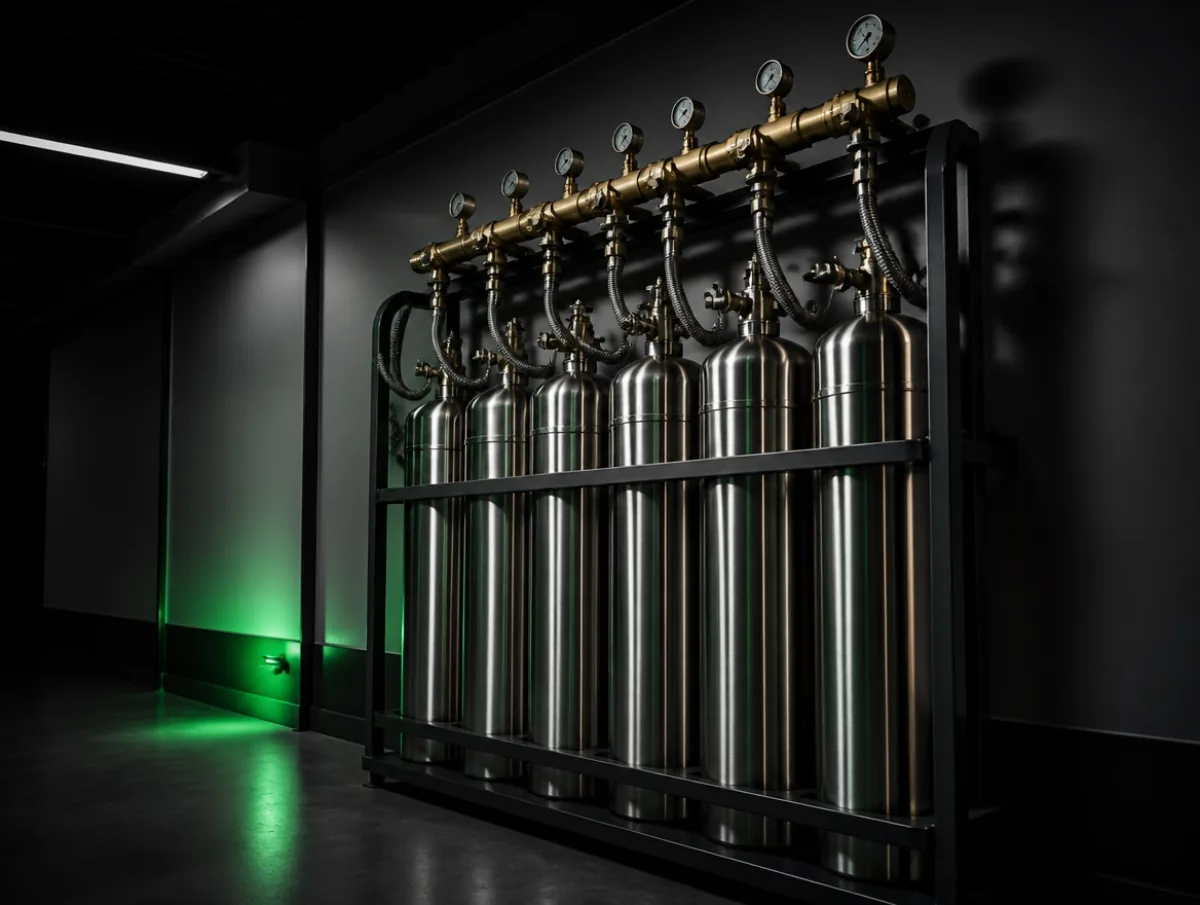
A bank of polished stainless steel high pressure CO2 cylinders in a steel frame, connected by braided hoses to a brass manifold with pressure gauges.
High pressure bulk storage stays fully enclosed. Nothing vents between fills.

Rooms we survey on a Denver site

Every Denver install starts with a walk through the building, because the rooms that need a sensor are the rooms where CO2 can pool, and those are rarely the rooms with an obvious spot on the wall.

  • Grow rooms on enrichment, plus the room where the CO2 supply sits
  • Extraction rooms that use CO2
  • Basement cellars and keg rooms under a bar
  • Walk-in coolers with gas lines running through them
  • Any below-grade space where the fill or distribution lines pass

What we hand over after a Denver install

Equipment is half of a passing inspection. The other half is showing the inspector what is installed, where, and at what thresholds, and that it has been maintained. You get a record of each sensor's location and alarm setting, the shutoff configuration, and the service history going forward, so the next inspection starts from paperwork rather than a search.

Under the 2024-based Denver code, the alarm configuration is also what a new grow room or extraction lab is most often held up on. Our permitting help exists for exactly that step: we specify the system so the sign-off is not the last thing to be designed.

Common questions

The 2025 Denver Building and Fire Code, adopted June 13, 2025 and effective December 31, 2025, which is based on the 2024 International Codes with Denver's own amendments.

Low. For enrichment systems the fire code puts them within 12 inches of the floor where gas is expected to collect, and floor level is the right instinct for any CO2 room.

Yes. Sensors drift and eventually need replacing, which we handle as a maintenance item on the account.

Yes. We survey the site, place sensors where the gas actually collects, and wire the alarms and shutoff to the existing supply where it is safe to do so.

Get a free CO2 assessment in Denver

We look at your current setup and usage and tell you what a right-sized system would cost to run.

Call 877-CO2-FOR-UFree assessment